The Best Notion Business Templates for Small Business Owners in 2026 (Complete Guide)

The Best Notion Business Templates for Small Business Owners in 2026 (Complete Guide)

Running a small business means juggling ideas, clients, planning, content, invoices, projects, goals… and often doing it all alone.
Notion is one of the best tools to bring everything together, but only if you use the right templates.

In this guide, you’ll discover the best Notion business templates for 2026, what each one is for, and how to choose the right system depending on where you are in your business.

Whether you’re a solopreneur, coach, creator, freelancer, or small business owner, this guide will help you build a business that feels clear, organised, and calm.

Why Notion Templates Matter (Especially for Small Business Owners)

Most business owners don’t struggle because they’re disorganised.
They struggle because their business is scattered:

Why Running Your Business in Ten Different Places Is Making Everything Harder

Why Running Your Business in Ten Different Places Is Making Everything Harder

Most small business owners are not struggling because they’re disorganised.
They’re struggling because their business is scattered everywhere.

Projects in one app, content in another, money tracked somewhere else, client notes in a notebook, screenshots saved in your photos, reminders in your head.
It feels heavy because it is heavy.

And no one can run a business with clarity like that.

This post is for the business owners who are doing everything alone and carrying all the mental weight. If it feels messy, slow, or overwhelming, there is nothing wrong with you. You just don’t have a central system holding everything for you.

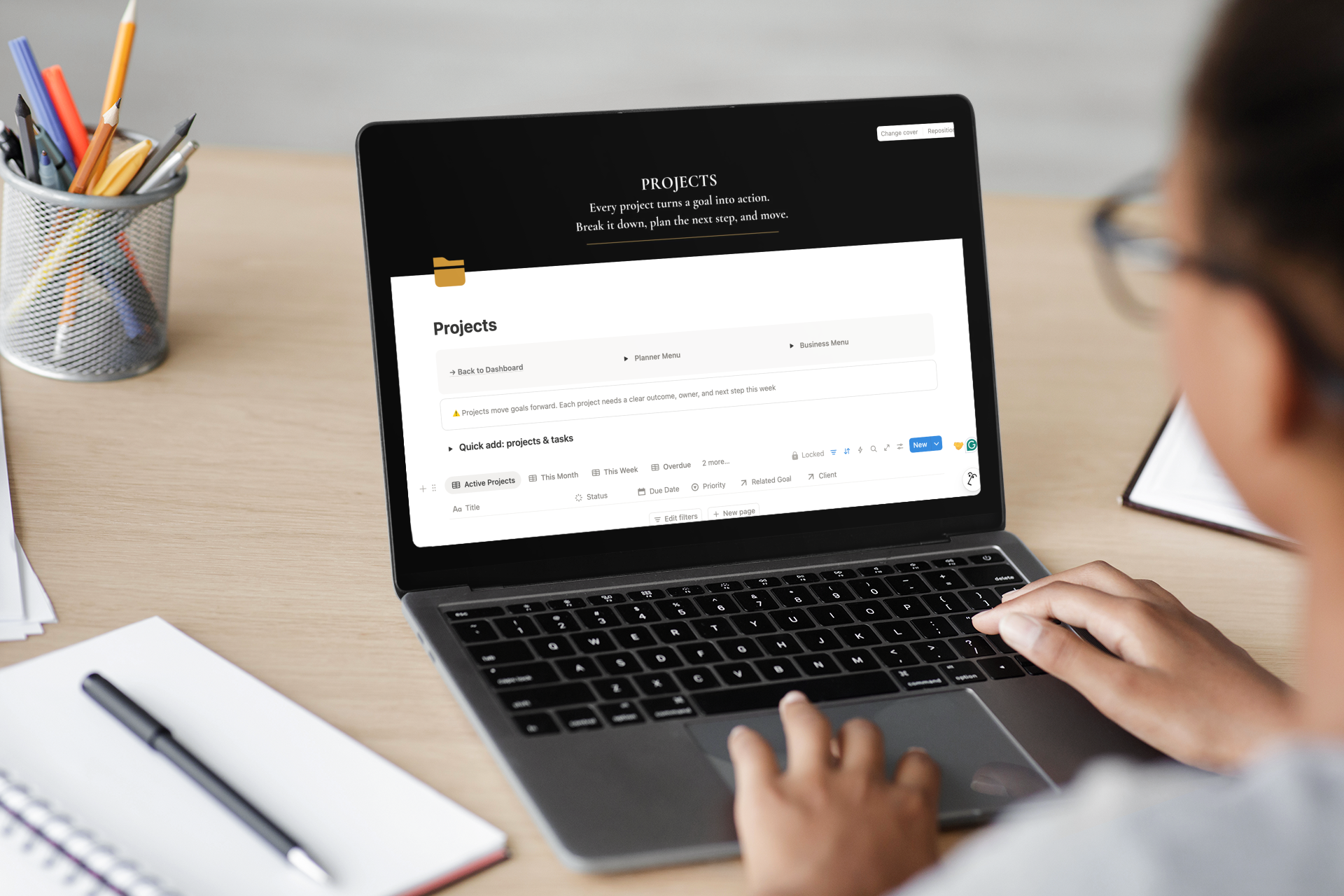
From planner pages to a full business system in Notion: the messy journey behind the MY PA Business Hub

From planner pages to a full business system in Notion: the messy journey behind the MY PA Business Hub

For the last few months, I have basically been in a cave.

On the outside it looked like “planner season as usual.” Orders going out. Emails coming in. Social posts. Real life.

On the inside, every spare hour was being poured into one question:

How do I take what MY PA does on paper and turn it into a proper business system that lives in Notion.

I thought it would be simple. A few databases. Some views. A nice dashboard.

It wasn't simple.

At several points I seriously considered walking away from it and pretending I never started.

The idea that would not leave me alone

For years, I have watched customers use the MY PA Planner as their weekly control centre. They plan their goals, block their time, review their weeks and actually move things forward.

But there was always this gap.

They were still running the business in their head. Leads. Client work. Invoices. Content. Ideas. To-dos. All in mental tabs.

The Best Planning System for 2026 (Real Entrepreneur Edition)

The Best Planning System for 2026 (Real Entrepreneur Edition)

How to Stay Aligned With Your Big Vision Every Month, Week and Day

Most small business owners do one of two things for the new year:

  • They write a big plan, then never look at it again.

  • Or they wing it week to week and hope it somehow adds up.

Neither really works.

The truth is, you need both:

  1. A clear big plan for 2026.

  2. A simple way to bring that plan into your months, weeks and days.

The Only 3 Things You Need for a Productive 2026

Most entrepreneurs believe they need motivation, perfect routines or complicated systems to stay productive. The truth is much simpler. A productive year comes from a few core habits done consistently, not endless lists or rigid plans.

If you want 2026 to feel clear, organised and manageable, you only need three things. These three things create the structure and consistency that make your business easier to run.

The Simple Monthly Reset for 2026

A monthly reset is one of the most powerful habits you can build. It gives you clarity at the start of every month, helps you stay focused on what matters and protects you from drifting or getting overwhelmed.

Here is your simple 2026 monthly reset that takes less than an hour and keeps your business moving forward all year.

The 2026 Entrepreneur Survival Checklist

The 2026 Entrepreneur Survival Checklist

Running a business can feel intense, overwhelming and chaotic, especially when you carry everything in your head. If you want 2026 to be the year you finally feel clear, organised and in control, you need a simple survival system.

This checklist gives you the essentials every entrepreneur needs to stay steady and focused all year. Think of it as your foundation for a successful 2026.

How to Use Time Blocking in 2026 (Simple Guide)

How to Use Time Blocking in 2026 (Simple Guide)

Time blocking is one of the simplest and most effective ways to stay focused and organised. It helps you protect your priorities, reduce overwhelm and make sure you are working on the things that actually move your business forward.

In 2026, more entrepreneurs are choosing time blocking over traditional to-do lists because it removes the chaos and gives you a clear rhythm for your days.

Here is a simple guide to help you start using time blocking in 2026.

Which Planner Should I Use in 2026? (Comparison Guide)

Which Planner Should I Use in 2026? (Comparison Guide)

Choosing the right planner for 2026 can feel overwhelming. There are so many options, each promising organisation, productivity and a better year. But most planners are designed for general life, not for entrepreneurs running a real business.

If you want 2026 to feel more focused, more structured and less chaotic, you need a planner that actually supports the way you work. This guide compares the most common types of planners and helps you choose the one that will genuinely carry you through the year.

2026 Productivity Trends: What Real Entrepreneurs Are Doing to Stay Focused Next Year

2026 Productivity Trends: What Real Entrepreneurs Are Doing to Stay Focused Next Year

Productivity is changing. Entrepreneurs are no longer chasing hustle culture, colour-coded schedules or unrealistic morning routines. In 2026, the most successful small business owners are choosing simplicity, clarity and systems that protect their energy instead of draining it.

If you want to feel more organised and focused next year, here are the productivity trends real entrepreneurs are leaning into for 2026.

How to Build a Simple Weekly Planning Ritual for 2026

How to Build a Simple Weekly Planning Ritual for 2026

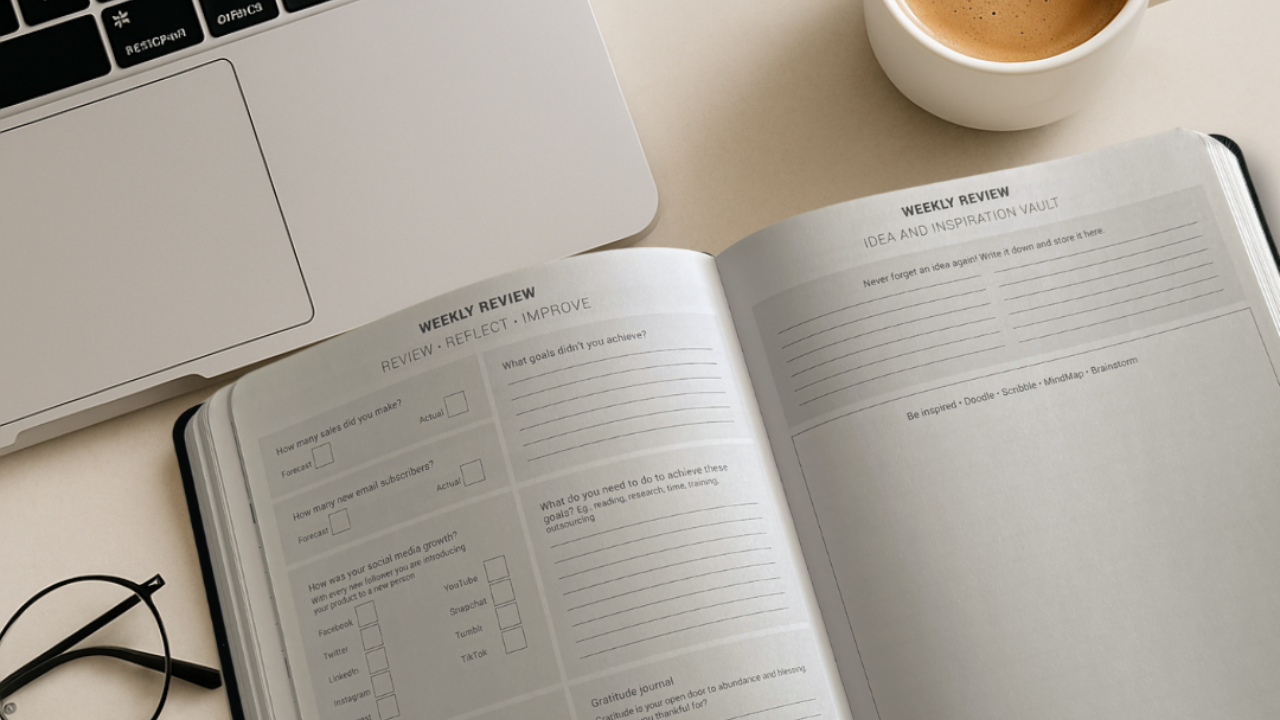
A successful year does not come from big goals or perfect motivation. It comes from the small weekly decisions you make, week after week. The truth is simple: when your week is organised, your business feels lighter, clearer and more manageable.

A weekly planning ritual gives you structure without pressure. It creates a rhythm that keeps you focused and removes the feeling of constantly catching up.

Here is how to build a simple weekly planning ritual that will support you throughout 2026.

The 2026 Reset Guide: How to Close 2025 Strong and Build a Better Year

The 2026 Reset Guide: How to Close 2025 Strong and Build a Better Year

The end of the year can feel heavy for many small business owners. You look back at everything you wanted to do, everything you pushed aside and the goals that are still waiting for you. It is easy to feel frustrated or behind, especially if the year felt messy or chaotic.

A proper year end reset gives you clarity, confidence and a clean slate. You can close 2025 in a calm, intentional way and step into 2026 with focus instead of pressure.

Here is a simple reset guide to help you finish strong and build a better year ahead.

2026 Goal Setting for Entrepreneurs: How to Make Sure This Is the Year You Move Forward

2026 Goal Setting for Entrepreneurs: How to Make Sure This Is the Year You Move Forward

Goal setting is one of the most powerful things you can do for your business, yet most entrepreneurs approach it in a way that guarantees frustration. They set too many goals, choose vague targets or rely on motivation to carry them through the year. By February, everything feels overwhelming again.

If you want 2026 to be the year you actually move forward, your goals need to be simple, focused and supported by a planning structure that makes follow through easy.

Here is how to set goals that work for real business owners.

10 Mistakes Entrepreneurs Make When Planning Their Year (and How to Avoid Them in 2026)

10 Mistakes Entrepreneurs Make When Planning Their Year (and How to Avoid Them in 2026)

Most entrepreneurs do not struggle because they are lazy or unmotivated. They struggle because they are overwhelmed, carrying everything in their head and reacting to whatever comes in. When planning your year, the smallest mistakes create the biggest stress later.

If you want 2026 to feel more organised, calm and consistent, here are the 10 common planning mistakes and how to avoid them.

Why Most Planners Fail and How to Choose One That Actually Helps You Grow Your Business in 2026

Why Most Planners Fail and How to Choose One That Actually Helps You Grow Your Business in 2026

Most planners look beautiful, but they do very little to actually support a real business. They are full of empty boxes, aesthetic quotes and clean layouts, but when you sit down to plan your week, they feel useless. Nothing connects. Nothing lines up. You end up writing the same to-do lists every day and still feeling behind.

This is why most people stop using their planner by February.

If you want 2026 to feel more structured, more productive and more stable, the problem is not you. The problem is the planner.

The Ultimate 2026 Business Planning Checklist

The Ultimate 2026 Business Planning Checklist

Planning your business year should not feel overwhelming. It should feel clear, calm and organised, with a simple structure that makes every month easier. Most small business owners try to plan everything in their head and end up feeling behind before the year even begins.

This 2026 Business Planning Checklist gives you a step by step way to prepare for the year ahead so you can stay focused, protect your time and move your business forward with confidence.

Use this checklist as your starting point for 2026, then repeat it every month and week to stay on track.

How to Plan Your Business Year in 2026: A Step-by-Step Guide

How to Plan Your Business Year in 2026: A Step-by-Step Guide

Planning your business year is one of the most powerful things you can do to protect your time, your energy, and your income. Most small business owners carry everything in their head, react to whatever comes in, and hope it somehow works out. It rarely does.

2026 can be different. With a clear structure and a simple planning rhythm, you can create a year that feels focused, steady, and profitable rather than chaotic and exhausting.

This guide walks you through the exact steps to plan your business year properly for 2026, using a system that works month after month.

Brand Style Guide Basics for Small Businesses

Why Consistency Matters

A strong brand isn’t just about having a logo. It is about showing up consistently across every touchpoint: your website, social media, packaging, proposals, and even your email signature.

When your look and tone are consistent, three things happen:

  1. You build trust because people recognise you instantly and feel confident buying from you.

  2. You save time because you don’t reinvent your visuals or voice every time you create content.

  3. You look professional. Even if you are a one-person business, consistency makes you appear established.

This is why you need a brand style guide.

What Is a Brand Style Guide?

A brand style guide is a simple document that defines the rules for how your brand looks and sounds. Think of it as your brand’s rulebook.

It doesn’t have to be a 40-page corporate document. For most small businesses, a 2–5 page style guide is enough to keep everything aligned.

Your style guide should cover both visual identity (colours, fonts, imagery, logos) and, ideally, your verbal identity (voice and tone).

The Core Elements of a Brand Style Guide

1. Colour Palette

Your colours are one of the strongest signals of your brand identity. Limit yourself to a small set:

  • Primary colours: 2–3 core brand colours

  • Secondary colours: 1–2 neutrals or accents

Always include exact codes: HEX for web, CMYK for print, and RGB for digital.

Example:
Primary: Deep blue (#003366), Aqua (#00AEEF)
Neutral: Light grey (#F5F5F5), Charcoal (#333333)

Tip: Test your colours for accessibility. Text should always have enough contrast to be easy to read.

2. Typography

Typography sets the tone of your brand’s personality. Clean, consistent fonts make your brand more polished.

  • Headline font: bold and distinctive but easy to read

  • Body font: simple and legible on screen and in print

  • Fallbacks: system fonts as backups for web use

Example:
Headline: Playfair Display (serif)
Body: Lato (sans-serif)

Keep to a maximum of two font families to avoid clutter.

3. Imagery

Images are powerful mood-setters. Decide on a clear style so your brand visuals always feel consistent.

Ask yourself:

  • Do we use photography or illustration?

  • Are images light and airy, bold and colourful, or dark and moody?

  • Do we prefer candid, natural shots or polished studio photography?

Examples:
A wellness brand may use bright, natural, minimalist photos.
A law firm may use professional, muted, confident photography.

Avoid generic stock photos. If you must use them, choose ones that feel authentic.

4. Logo Use

Your logo is your anchor. A style guide should cover:

  • Primary logo (the main version)

  • Alternative versions (monochrome, reversed, icon-only)

  • Spacing rules (how much space to leave around it)

  • Minimum size (to keep it legible)

  • Don’ts (stretching, changing colours, adding shadows)

Tip: Show visual examples of correct and incorrect use.

5. Voice and Tone (optional but powerful)

Your style guide doesn’t need to stop at visuals. Adding a section on voice and tone ensures your brand sounds the same everywhere.

Decide on 3–4 tone words that describe your communication style.

Examples:

  • Supportive, clear, motivating, approachable

  • Bold, confident, witty, direct

  • Professional, authoritative, calm, trustworthy

If visuals are the face of your brand, voice is the personality.

How to Create a Simple Style Guide

  1. Start with a blank document or Canva template.

  2. Add your logo, colour palette with codes, and fonts.

  3. Write one or two paragraphs about your imagery style.

  4. Add logo rules and usage examples.

  5. (Optional) Write 3–4 tone words and sample text snippets.

Even this simple version will give you a professional foundation.

Example: What a 3-Page Style Guide Might Include

  • Page 1: Logo, colours with HEX codes, and fonts

  • Page 2: Image style examples, do’s and don’ts

  • Page 3: Voice and tone words with a sample sentence

That’s enough to brief a designer, social media manager, or copywriter, and keep your brand looking and sounding consistent.

Checklist: Does Your Style Guide Work?

✅ Does it include a clear colour palette with exact codes?
✅ Have you chosen only one or two fonts for consistency?
✅ Do you have clear logo rules and don’ts?
✅ Is your imagery style defined?
✅ Is your voice and tone consistent with your brand personality?

Key Takeaway

A brand style guide is your shortcut to a consistent, professional identity. It doesn’t need to be complex. Even a short, clear document makes your brand stronger and saves you endless time and confusion later.

Go further

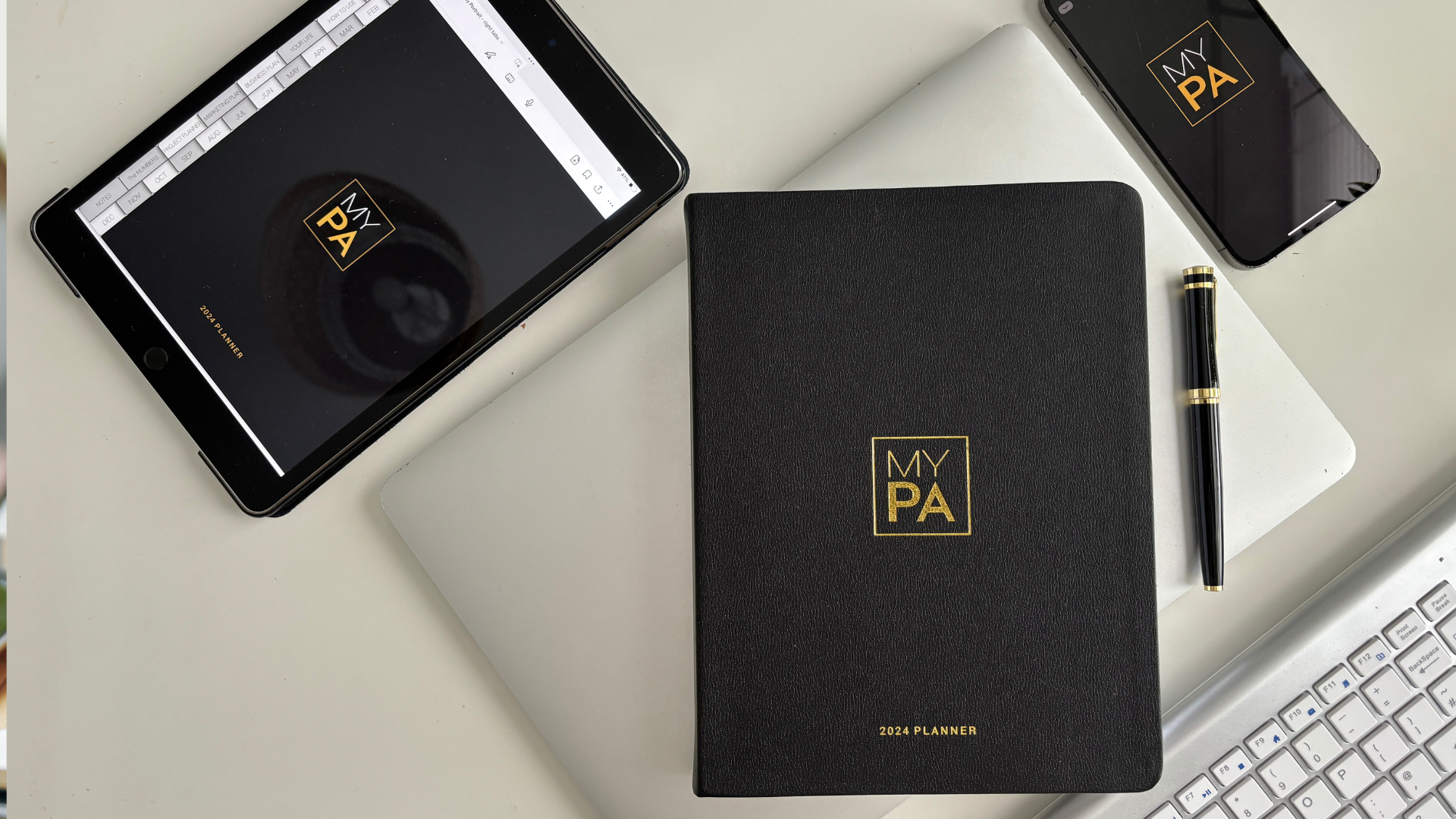
MY PA Business Planner 2026

Need more than a one-pager?

MY PA Business Planner (physical & digital) helps you plan weekly, track goals, and stay accountable.

See the Planner
Business Starter Kit

Ready for the complete system?

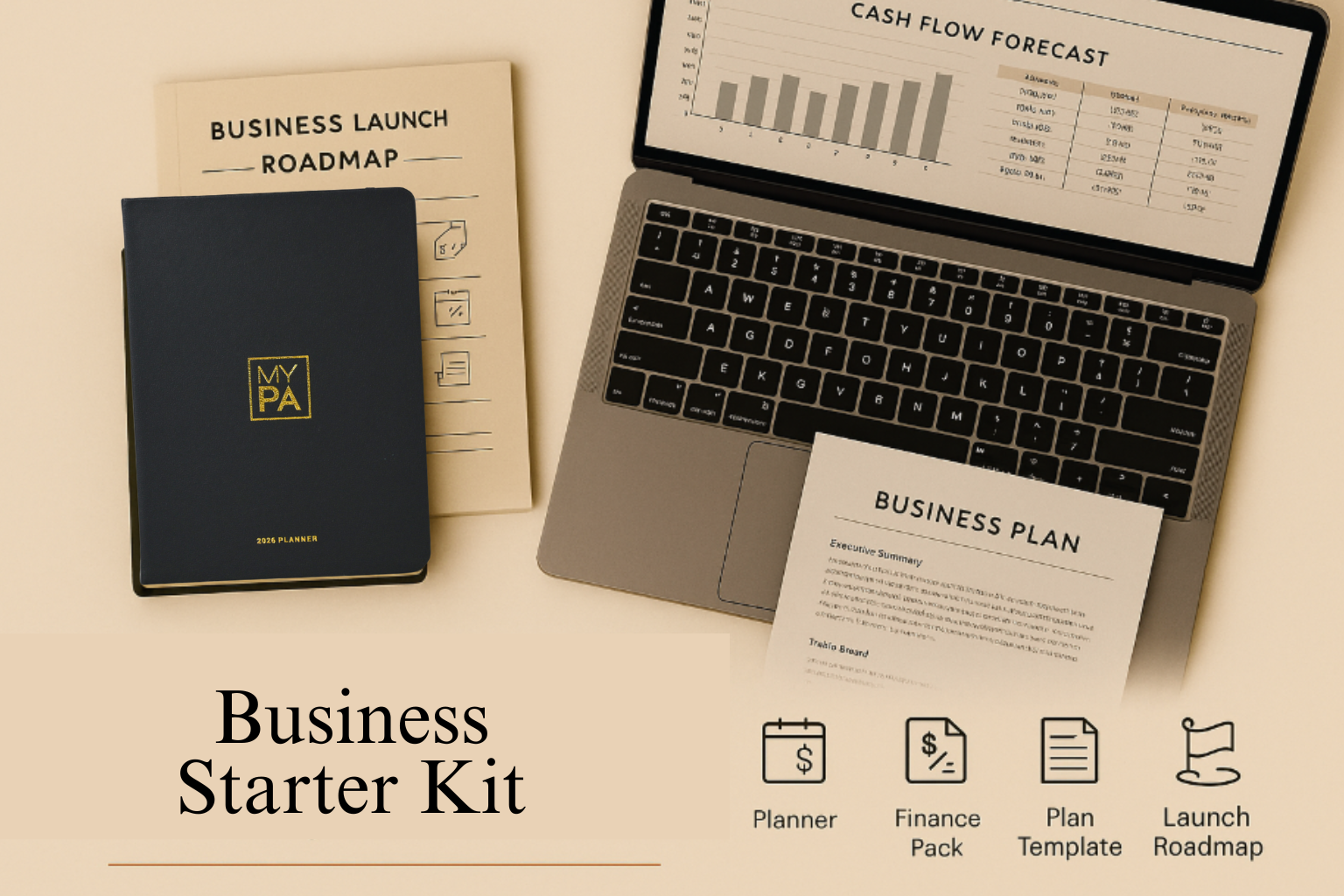
The Business Starter Kit bundles the planner with templates, financial tools, and a 30-day roadmap.

Explore the Starter Kit
Investor Kit

Raising funding?

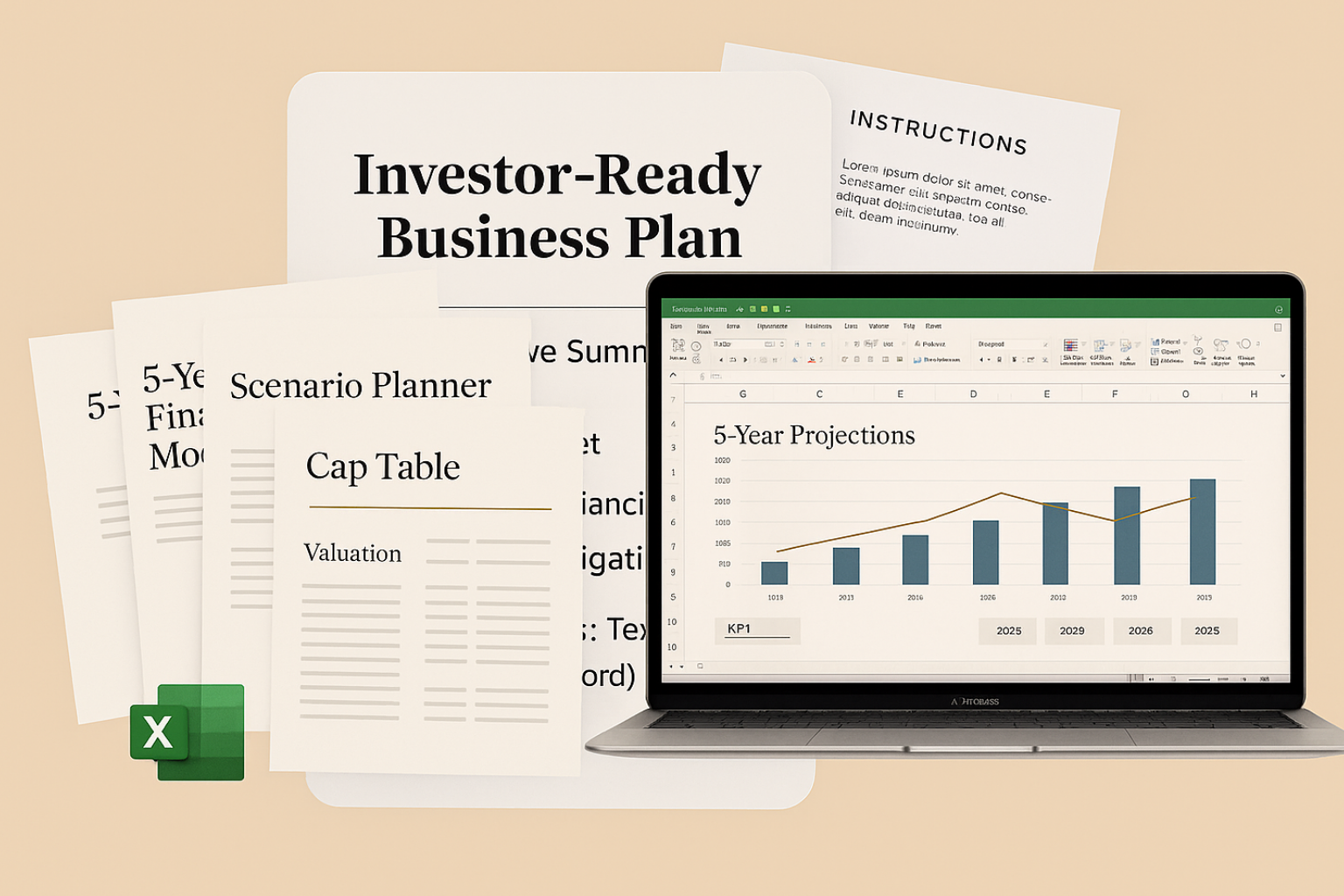
Get investor-ready with structured planning, forecasts and checklists. (Investor Kit link set to Starter Kit as requested.)

See Investor Kit

How to Write Your Brand Story

How to Write Your Brand Story

Why Your Brand Story Matters

People don’t just buy products — they buy stories they believe in. Your brand story is the narrative that ties together your mission, your values, and your customer’s journey.

Think about some of the most loved brands: Patagonia, Innocent Drinks, or Apple. Their products are great, but what keeps people loyal is the bigger story — protecting the planet, making healthy eating fun, or empowering creativity.

Brand Positioning, Simple Examples

Brand Positioning, Simple Examples

Why Brand Positioning Matters

If you don’t decide how you want your business to be seen, the market will decide for you. That’s why brand positioning is critical. It defines the unique space you occupy in your customer’s mind, and it shapes how people compare you to your competitors.

Strong positioning makes your business memorable, helps you stand out, and gives customers a reason to choose you. Without it, you risk blending into the background.