Runway and Forecasting Basics: How to Build Startup Forecasts Investors Trust

Why runway matters

In startup life, cash is oxygen. Runway is the number of months your business can survive before it runs out of cash. If you misjudge it, you risk scrambling for funding at the worst possible time.

For founders, knowing your runway helps you plan ahead. For investors, it signals when you’ll need capital again and whether you’re managing your resources with discipline.

How to calculate runway

The formula is simple:

Runway = Current Cash Balance ÷ Monthly Burn Rate

  • Example: If you have £150,000 in the bank and spend £25,000 per month, your runway is 6 months.

This back-of-the-envelope calculation is what investors will do immediately when they look at your financials.

💡 Tip: Always calculate your “net burn” (spend minus revenue). If you generate £10k/month in revenue but spend £35k, your net burn is £25k.

Why investors care

A founder raising with less than 6 months of runway is negotiating from a position of weakness. It creates urgency, which often leads to down rounds or poor terms.

Savvy investors prefer founders who raise with 9–12 months of runway left. It shows foresight, confidence, and an ability to execute under less pressure.

Building forecasting scenarios

Investors know no forecast is perfect. What matters is whether you’ve thought through different outcomes. A good forecast includes three scenarios:

  • Base Case: Conservative revenue growth, steady expenses.

  • Best Case: Faster customer acquisition, higher retention, controlled costs.

  • Worst Case: Growth slows, costs creep up, and fundraising is delayed.

This tells investors: “I’ve considered risks, and I have a plan no matter what happens.”

How to build credible forecasts

Early-stage founders often overcomplicate their models. You don’t need 200-line spreadsheets. You need clarity on the drivers of growth.

  • Keep assumptions simple.
    Example: 100 new customers/month at £20 ARPU (average revenue per user).

  • Tie expenses to growth drivers.

    • Marketing spend = new customer acquisition.

    • Product spend = improved retention.

    • Hiring = capacity to scale operations.

  • Focus on 3–5 key variables.
    This makes your model transparent and flexible, rather than fragile and unrealistic.

Example from the real world

Uber’s earliest forecasts were far from perfectly accurate — but they impressed investors because they showed a clear logic:

  • Spend on driver acquisition → More drivers → Faster rider adoption.

  • Offer rider incentives → Boost trips → Build market dominance.

The model was credible not because of precision, but because of its cause-and-effect clarity.

Common mistakes founders make

  • 📊 Only showing best case. Investors see through this instantly.

  • 👥 Forgetting hiring costs. Growth requires people, and payroll is usually the biggest expense.

  • 📈 Assuming endless linear growth. Growth curves flatten, churn happens, and competition enters.

The takeaway

Runway and forecasting aren’t about predicting the future with perfection. They’re about showing that you:

  • Understand your numbers.

  • Have thought through multiple scenarios.

  • Can explain how funding today leads to growth tomorrow.

👉 Next Step: Use the Investor Kit for ready-to-use forecasting templates, scenario models, and investor-ready financials.

Go further
MY PA Business Planner 2026

Need more than a one-pager?

MY PA Business Planner (physical & digital) helps you plan weekly, track goals, and stay accountable.

See the Planner
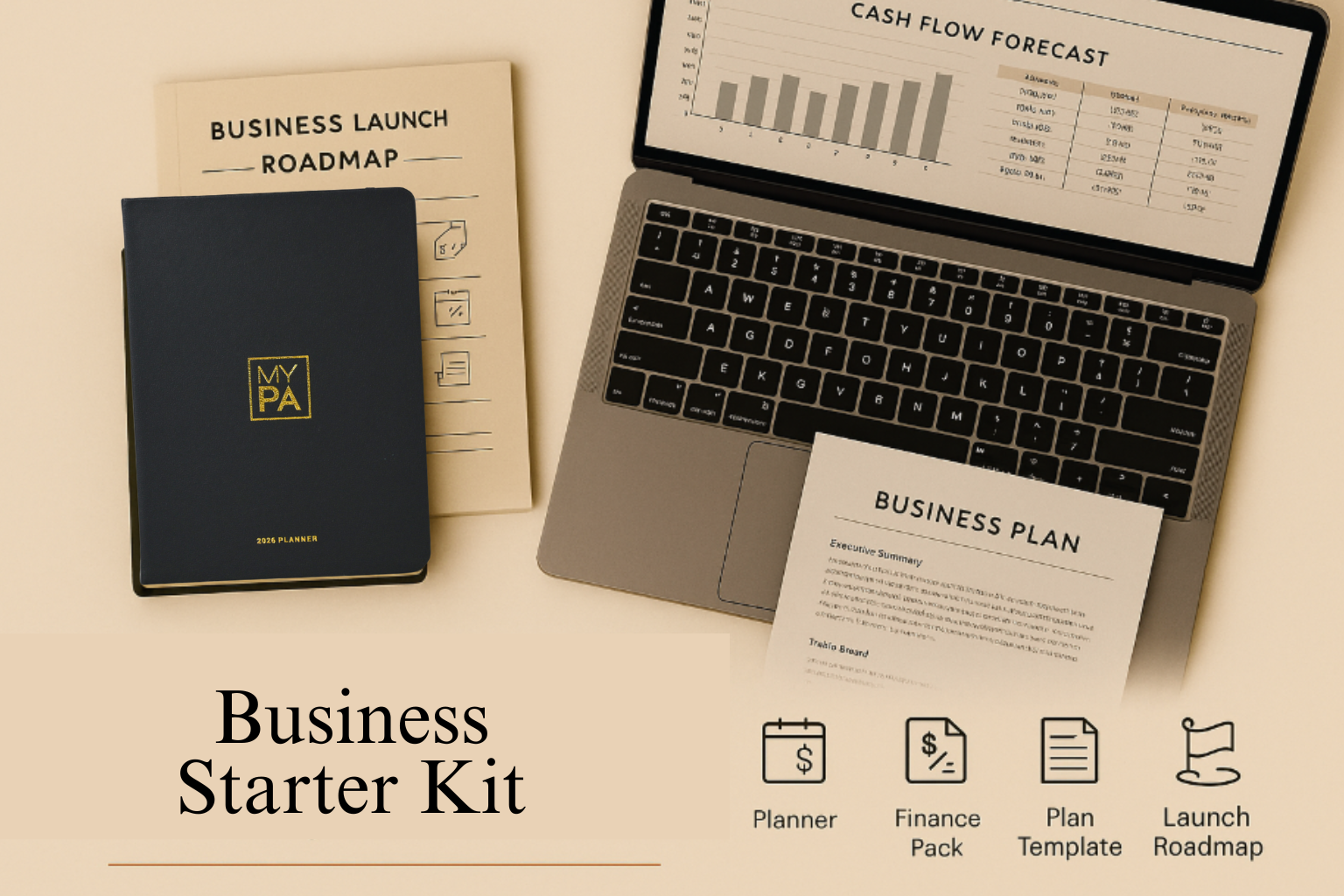
Business Starter Kit

Ready for the complete system?

The Business Starter Kit bundles the planner with templates, financial tools, and a 30-day roadmap.

Explore the Starter Kit
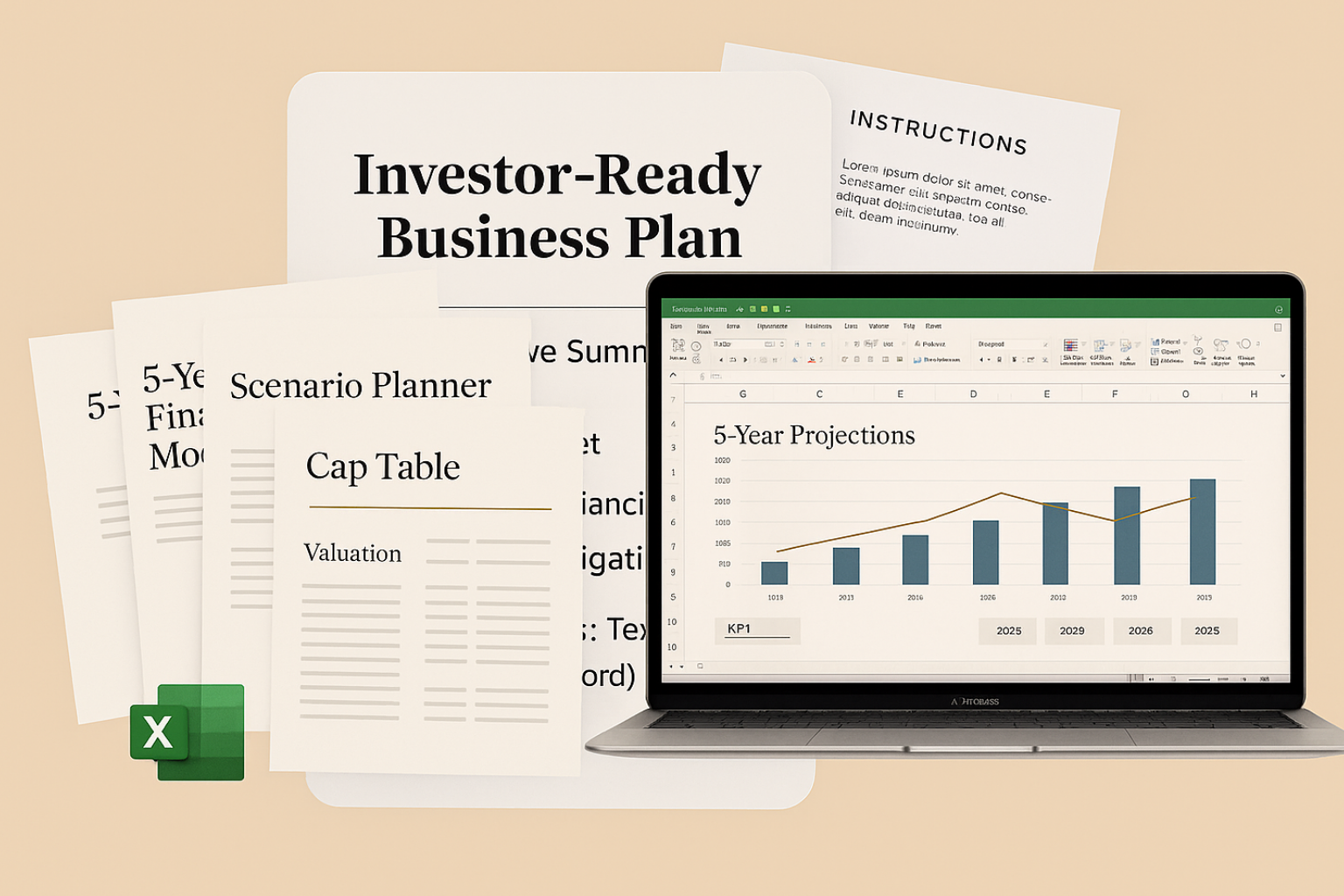
Investor Kit

Raising funding?

Get investor-ready with structured planning, forecasts and checklists. (Investor Kit link set to Starter Kit as requested.)

See Investor Kit

The Startup Metrics Investors Actually Care About (and Which Ones You Can Skip)

The Startup Metrics Investors Actually Care About (and Which Ones You Can Skip)

When founders hear “investor metrics,” they often think of complex SaaS dashboards full of acronyms — CAC, LTV, churn, MRR. But here’s the truth: most early-stage investors don’t expect all of those. What they do want is a clear financial story, backed by a few key numbers that prove your business is investable.

This guide breaks down the metrics that matter for small businesses and early-stage startups (the ones you must include), and the “nice-to-haves” that only apply if you’re building a high-growth tech venture.

Business Plan Financials (Made Simple)

Business Plan Financials (Made Simple)

Business Plan Financials (Made Simple)

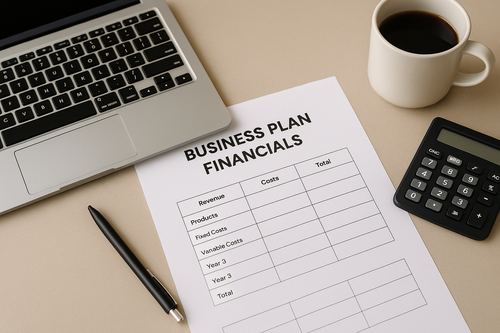
Numbers can feel intimidating, but your financials don’t need to be complex spreadsheets that only accountants understand. The purpose of your business plan financials is simple: show how your business will make money, what it will cost to run, and when it will start to generate profit.

Here’s how to build financials that work — without drowning in jargon.

How to Validate a Business Idea Before You Launch

How to Validate a Business Idea Before You Launch

How to Validate a Business Idea Before You Launch

Starting a business is exciting, but it’s easy to fall into the trap of building something nobody actually wants. The good news is, you don’t need to spend months (or thousands) to know if your idea has potential. Validation is about testing demand early, with simple steps that save you time, money, and energy.

Here’s how to validate your business idea before you launch:

How to Beat Procrastination – Why We Delay and How to Stop

How to Beat Procrastination – Why We Delay and How to Stop

Why we procrastinate

Most people think procrastination is about poor time management, but that’s rarely true. At its core, procrastination is emotional.

  • Fear of failure – You delay because starting makes the risk of failing real.

  • Fear of success – Growth brings new responsibilities and pressure, so you hold back.

  • Perfectionism – You wait for the “perfect” idea, draft, or plan, which never comes.

  • Overwhelm – The task feels so big and unclear that your brain chooses easy distractions instead.

The Daily Top 3 Method - How to Stay Focused Every Day

The Daily Top 3 Method - How to Stay Focused Every Day

Why your to-do list is working against you

Most entrepreneurs start the day with a long to-do list. By the evening, half the tasks are untouched and guilt sets in. The problem isn’t laziness — it’s overload.

A never-ending list creates decision fatigue. You don’t know where to start, so you bounce between tasks, answering emails, putting out fires, and never making progress on the things that truly matter.

The MY PA System – Plan, Focus, Execute

Why most planning systems fail

Entrepreneurs often juggle too many ideas at once. Some buy productivity tools, some download dozens of templates, and others rely on sticky notes scattered across their desks. The problem isn’t a lack of ambition — it’s the lack of a clear, repeatable system.

That’s why we built the MY PA system. It was designed to work for real entrepreneurs, not productivity gurus with unlimited free time. At its heart are three simple but powerful steps: Plan. Focus. Execute.

Step 1: Plan monthly

At the start of each month, you set up to five core goals. These goals aren’t vague resolutions, but clear, measurable outcomes. Each goal is then broken into projects and mapped into your monthly view.

Why monthly?

  • A year is too long — you’ll drift off course.

  • A week is too short — it feels like firefighting.

  • A month is just right — long enough to make progress, short enough to stay motivated.

👉 Example:

  • Goal: Gain 5 new paying clients.

  • Projects: Update service page, launch LinkedIn campaign, run 3 sales calls per week.

Step 2: Focus weekly

Every Sunday or Monday, you zoom in on your weekly priorities. From your projects, you choose the tasks that will move your goals forward this week. This prevents overwhelm and stops you from reacting to whatever feels urgent.

The weekly section in the MY PA planner helps you:

  • Review last week’s wins and lessons.

  • Choose 3–5 priorities for the week.

  • Time block the most important tasks.

This rhythm keeps your business moving forward in a straight line, not in circles.

Step 3: Execute daily

Big goals don’t get achieved in one heroic day. They happen through small, focused steps repeated consistently.

That’s why MY PA includes the Daily Top 3 Method — a simple but powerful practice. Each day, you choose the three tasks that matter most. If you complete nothing else, finishing these three will still move your business forward.

Pairing this with time blocking ensures those tasks actually get done, instead of being pushed aside by distractions.

The magic is in the connection

The real power of the MY PA system isn’t in any single step. It’s in how monthly planning, weekly focus, and daily execution fit together.

  • Monthly keeps your direction clear.

  • Weekly keeps your progress steady.

  • Daily keeps your actions sharp.

Most people plan, but they don’t connect the dots. MY PA makes sure every action you take is linked to your bigger goals.

Common pitfalls to avoid

  • Planning too many goals — stick to five or fewer.

  • Skipping weekly reviews — they’re the glue that keeps the system working.

  • Focusing on “busy work” instead of top priorities.

  • Forgetting to time block — without scheduling, important tasks often get lost.

Final thoughts

The MY PA system gives you structure without overwhelm. It’s not about filling every minute with tasks. It’s about working smarter — planning your direction, focusing on what matters, and executing daily with clarity.

👉 Download the Free Business Planner to try the MY PA system for yourself. Start with monthly goals, focus your week, and execute with confidence.

Go further

MY PA Business Planner 2026

Need more than a one-pager?

MY PA Business Planner (physical & digital) helps you plan weekly, track goals, and stay accountable.

See the Planner
Business Starter Kit

Ready for the complete system?

The Business Starter Kit bundles the planner with templates, financial tools, and a 30-day roadmap.

Explore the Starter Kit
Investor Kit

Raising funding?

Get investor-ready with structured planning, forecasts and checklists. (Investor Kit link set to Starter Kit as requested.)

See Investor Kit
How to Set Monthly Goals – A Step-by-Step System That Works

How to Set Monthly Goals – A Step-by-Step System That Works

Most entrepreneurs set big yearly resolutions in January — and by March, many of them are forgotten. The problem isn’t ambition. It’s structure. A year is too long to stay focused, and a week can feel too short to achieve anything meaningful. That’s why monthly goals are so effective.

A month is the sweet spot: long enough to make progress, short enough to keep momentum.

With the MY PA system, you can set up to five monthly goals, then break them into projects and actions that flow into your weekly and daily planning. Here’s how to make it work.

Break-even Explained

Break-even Explained

Every entrepreneur should know their break-even point. It’s the sales level where your revenue finally covers your costs. Before this point you’re running at a loss, after it you start to build profit.

Break-even is not just a number. It’s a decision-making tool that helps you plan with confidence, test scenarios, and know exactly what it takes to keep the lights on.

How to Price Products and Services

How to Price Products and Services

Pricing is one of the most important decisions you will make in your business. Get it wrong and you risk working too hard for too little or losing customers to competitors. Get it right and pricing becomes a growth engine that funds your vision and positions your brand with confidence.

The good news is that pricing does not need to be complicated. With a few proven methods, you can set numbers that make sense to your customers and keep your business profitable.

Cash Flow 101 for Small Businesses

Cash Flow 101 for Small Businesses

Cash is the lifeblood of any business. It doesn’t matter how many sales you make if the money isn’t in your account when you need it. That’s why managing cash flow is one of the most important habits every entrepreneur can build.

This guide gives you the basics = what cash flow is, common mistakes, and simple steps you can take to keep your business healthy.

What is cash flow?

Business Plan Financials (Made Simple)

Business Plan Financials (Made Simple)

Numbers are often the part of business planning that scare people off. Spreadsheets, forecasts, break-even points, it can feel like a different language. But here’s the truth: you don’t need to be a financial expert to write simple, useful business plan financials.

With a few basic steps, you can build a financial picture that helps you make decisions, avoid nasty surprises, and,when the time comes ,show investors you’re serious.

How to Optimise Your Business for AI Search (Before Everyone Else Catches Up)

How to Optimise Your Business for AI Search (Before Everyone Else Catches Up)

Not long ago, I caught myself Googling to check if ChatGPT was down. That small moment made me realise how quickly our search habits are changing.

More and more people aren’t asking Google. They’re asking ChatGPT, Co Pilot,Claude, Perplexity, and other AI-driven tools. Instead of scrolling through a page of blue links, they expect a direct, conversational answer.

And here’s the part that really struck me: I’ve noticed a huge spike in sales from ChatGPT-related searches. That’s not theory, that’s real behaviour shifting right now.

Business Launch Checklist: 10 Steps Before You Start

Business Launch Checklist: 10 Steps Before You Start

Launching a business is exciting, but it can also feel like there’s a hundred things pulling at your attention. The truth is, you don’t need to do everything at once. What you need is a simple checklist that keeps you focused on the essentials.

This guide walks you through the 10 key steps every entrepreneur should tick off before, during, and right after launch. Follow them and you’ll avoid overwhelm, save money, and move with confidence.

How to Write a One-Page Business Plan

How to Write a One-Page Business Plan

Starting a business can feel overwhelming. You know you need a plan, but the thought of writing a 40-page document makes most people quit before they’ve even begun. That’s why thousands of entrepreneurs now use a one-page business plan.

It’s quick, focused, and gives you clarity without the fluff. You’ll walk away with a roadmap you can actually use — not a binder that sits on the shelf.

I stopped trying to do it all, and grew faster

I stopped trying to do it all, and grew faster

There’s a point in business where doing more just stops working.

You’re ticking off tasks, filling every hour, answering emails late at night, and yet the results don’t match the effort. You’re constantly busy, but you’re not moving forward in the way you want to.

That’s exactly where I found myself.

And the change that helped me grow wasn’t a fancy system, new productivity hack, or clever app. It was something much simpler and more uncomfortable.

I stopped trying to do it all.
And I started choosing better.