

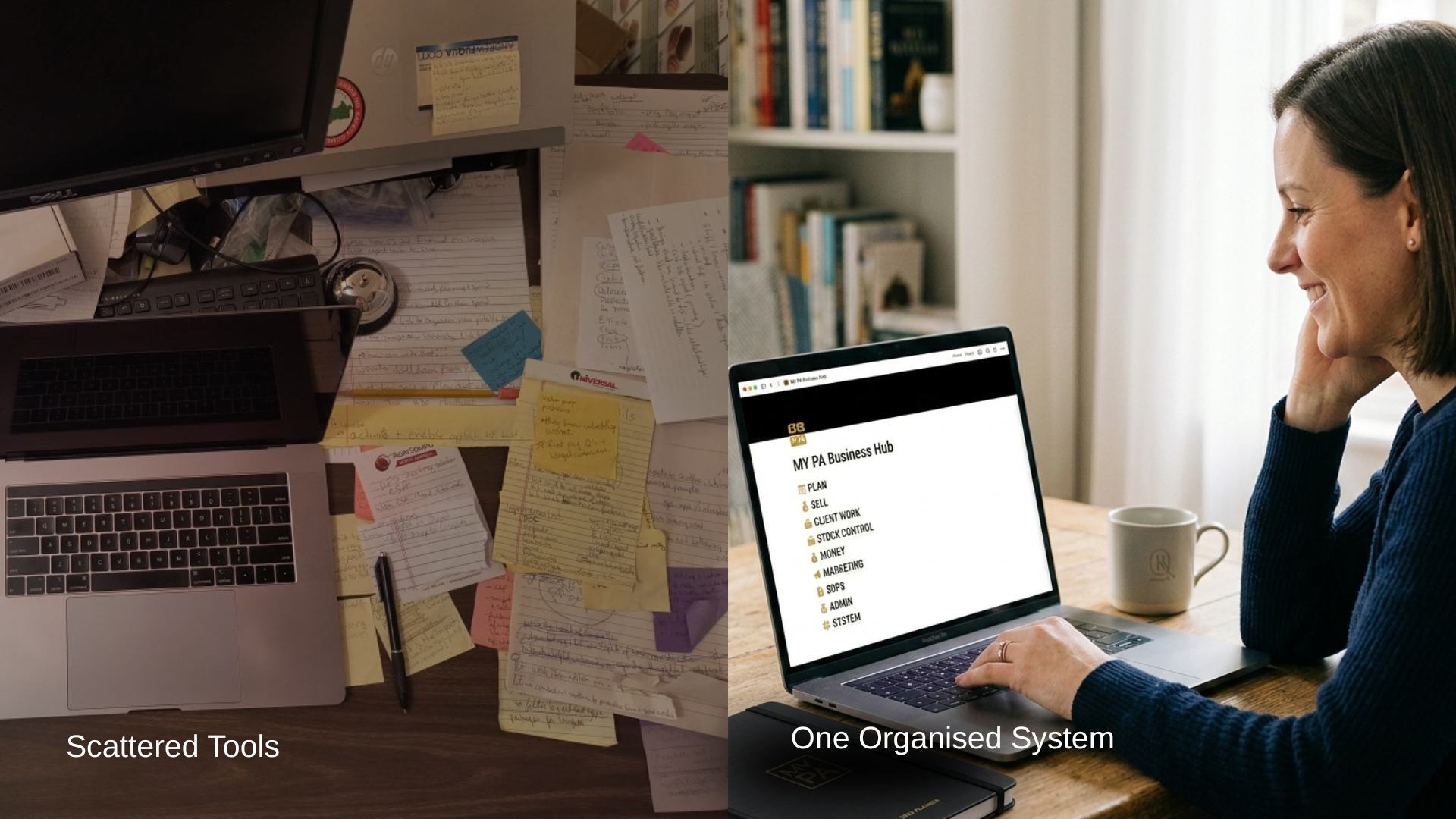
The other day I posted a poll asking founders how they currently run their businesses.
About 50% said they’re using a mix of apps and tools, kind of making it work as they go.
And I get it, that’s how most businesses start.
A note in your phone.
A task list somewhere.
Ideas in a doc.
Client stuff in email.
Money stuff in a spreadsheet.

Small business finances often feel messy, not because they are complicated, but because they are scattered.
Money lives across bank accounts, invoices, subscriptions, spreadsheets, payment platforms, and memory. Important details appear late, which creates stress and reactive decisions.
Financial organisation is not about doing more bookkeeping. It is about visibility.
When you can see what is coming in, what is going out, and what is expected next, decisions become calmer and more intentional.

Sales often feel unpredictable in small businesses, not because opportunities are missing, but because they are not tracked clearly.
Messages sit in inboxes. Conversations are remembered loosely. Follow ups depend on memory. Good opportunities quietly disappear.
Sales organisation is not about pressure. It is about continuity.
When you can see who you spoke to, what happens next, and when to follow up, sales becomes calmer and more consistent.

Running a small business often feels chaotic, not because you lack ideas or motivation, but because work has no clear path.
Ideas sit in notes. Tasks live on scattered lists. Admin interrupts meaningful work. Important projects stall while urgent noise takes over.
The problem is rarely effort. It is structure.
An organised business does not rely on memory or motivation. Work moves through a simple rhythm so the right things surface at the right time.