


Small business finances often feel messy — not because they are complicated, but because they are scattered.
Money lives across bank accounts, invoices, subscriptions, spreadsheets, payment platforms, and memory. Important details appear late, which creates stress and reactive decisions.
Financial organisation is not about doing more bookkeeping. It is about visibility.
When you can see what is coming in, what is going out, and what is expected next, decisions become calmer and more intentional. For a deeper look at how cash flow works, download our free Cash Flow Survival Guide.
Why Small Business Finances Feel Overwhelming
Most financial stress comes from uncertainty rather than numbers.
You are unsure what payments are due, when income will arrive, or how much is actually profit. Financial tasks get postponed because they feel unclear, which increases pressure later.
Organisation removes guesswork.
What Organised Finances Actually Look Like
An organised financial system answers simple questions quickly: What income is expected. What expenses are due. What subscriptions exist. What has been paid. What profit looks like.
You do not need constant monitoring. You need reliable snapshots. See our full library of finance tools for small business for templates and calculators that help with this.
Separating Personal and Business Finances
One of the most important steps in financial organisation is creating a clear boundary between personal and business money.
When everything sits in the same account, it becomes difficult to understand what the business is generating, what it costs to run, and what you can safely take as income.
Separation does not need to be complicated. It simply means giving business money its own space so visibility improves.
This might include a dedicated business account, a clear way to pay yourself, tracking business expenses separately, and reviewing profit before personal spending decisions.
This boundary reduces stress because decisions stop relying on guesswork. You can see what belongs to the business and what belongs to you. Financial clarity starts with separation.
The Monthly Money Rhythm
Financial organisation works best as a routine rather than a constant task.
Each month you review income, confirm upcoming payments, assess expenses, and note anything that affects planning. This keeps finances connected to your workflow without dominating your attention.
This is also when you review what you can pay yourself rather than deciding day to day.
Money becomes part of decision-making rather than something separate you avoid. If you want a broader monthly rhythm that connects finances to goals and projects, read about the simple monthly reset.
Separating Operational Money from Strategic Money
Operational money is day-to-day activity such as invoices, bills, and subscriptions.
Strategic money is pricing, investment, growth decisions, and profit targets.
When these are mixed together, small fluctuations feel more dramatic than they are. Separation creates clarity. For help with the strategic side — pricing, break-even, and forecasting — see our break-even guide and how to price products and services.
Making Expected Payments Visible
One of the biggest improvements you can make is tracking expected income.
When future payments are visible alongside current finances, you can plan workload, capacity, and spending with more confidence.
Visibility replaces anxiety. Predictability is more valuable than precision when you are running a small business.
Connecting Finances to Projects
Money does not exist in isolation. It connects to the work you are doing.
Projects generate revenue. Client work drives invoices. Marketing influences future income. Expenses support delivery.
When finances connect to projects, you understand the business more clearly. This is why having your finances inside the same system as your goals and projects — rather than in a separate spreadsheet — changes how you make decisions.
Recurring Costs and Subscriptions
Recurring expenses often create hidden complexity.
Subscriptions, software, memberships, and services should appear automatically based on timing so they do not rely on memory.
This prevents surprises and improves forecasting.
A Simple Starting Point
You do not need a complex system to begin.
List expected income. List fixed expenses. Note recurring costs. Separate personal and business money. Review once a month.
Consistency matters more than precision.
If you want a structured starting point, our free business plan template includes a financial planning section. And the Cash Flow 101 guide walks you through the basics.
How Finances Fit into an Organised Business
In an organised workflow, financial items surface when relevant rather than living on a separate list.
Bills appear when due. Expected payments become visible. Profit can be reviewed without searching across tools.
This keeps finances supportive rather than overwhelming.
If you are working on your overall workflow, you may also find it helpful to read how to organise your small business workflow so planning, projects, sales, and money stay connected.
From Visibility to Confidence
Financial organisation does not require perfection. It requires a place where money information lives and a rhythm for reviewing it.
When income, expenses, and expectations stay visible, decisions become easier and growth becomes intentional.
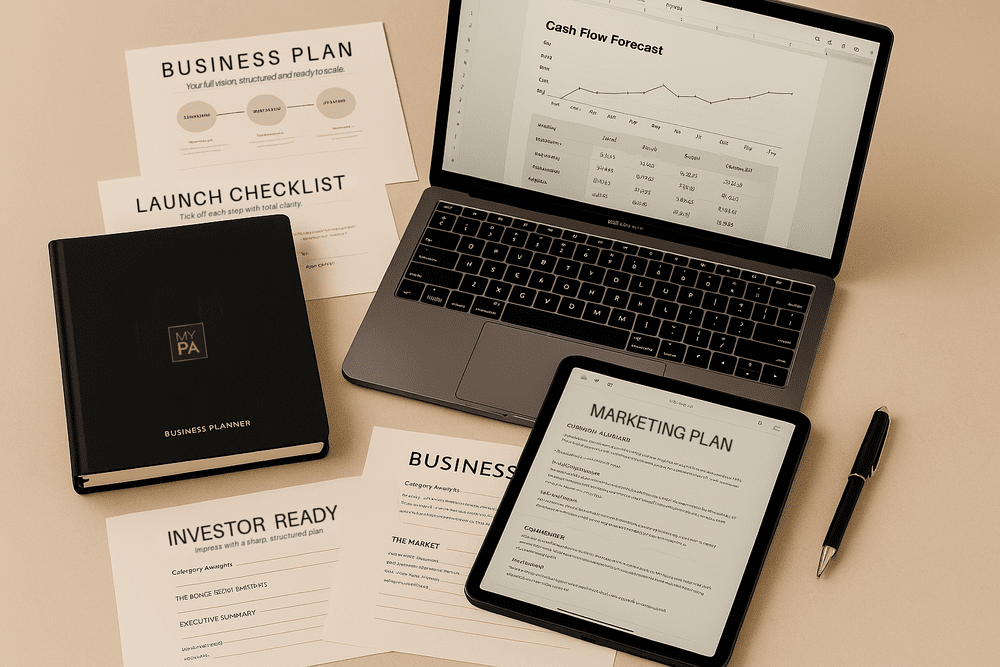
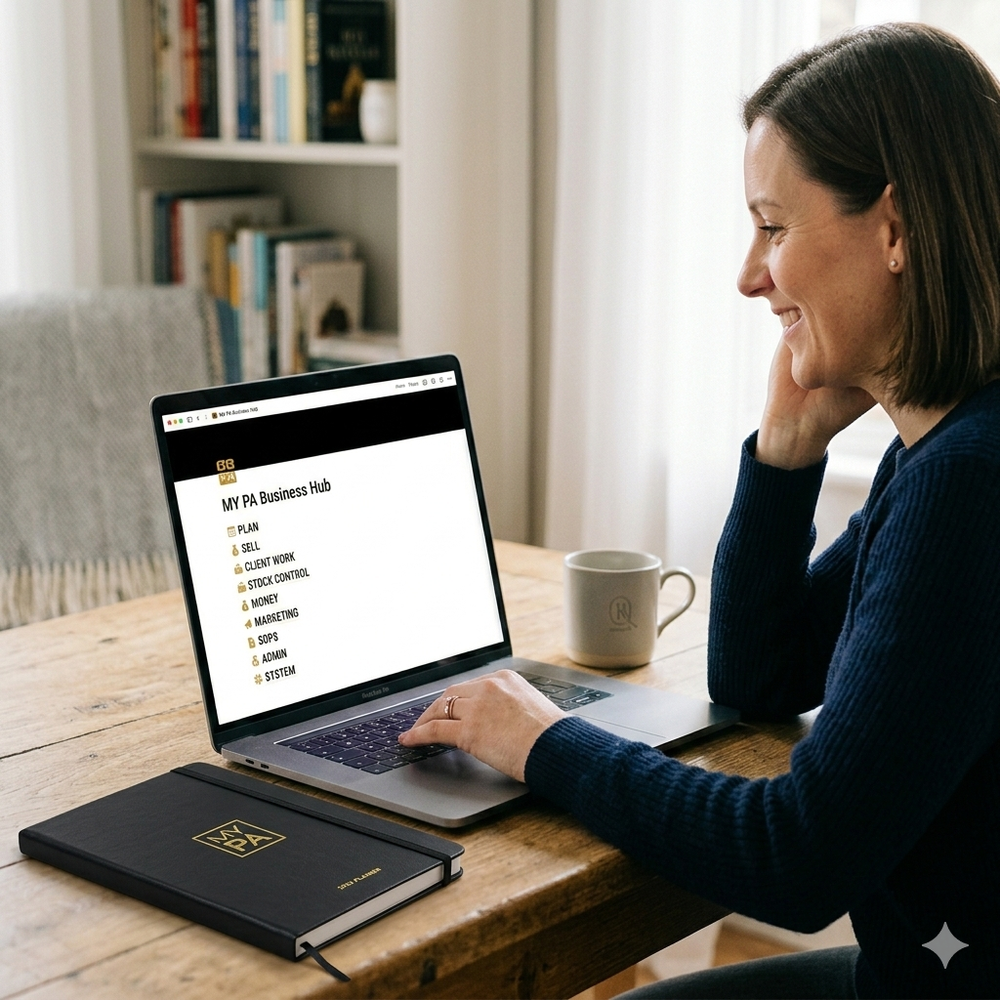
The MY PA Business Hub connects planning and financial visibility so your numbers sit alongside projects, priorities, delivery, and sales in one place — instead of separate tools.
If you prefer paper, the MY PA Business Planner includes a financial tracking section alongside your weekly planning. And the free planner sample lets you try the layout before committing.
Explore all our free business resources for more tools and templates.
Start your business without guessing
The Business Starter Kit gives you the plan, the pricing, and one place to run it, so you always know what to do next.
- Clear plan, step by step from idea to launch.
- Price for profit, know what to charge and what you will make.
- One Business HQ, run your entire business from one place from day one.
Start free, then choose the next step when you are ready.