

This guide explains how to organise a small business so work moves clearly from planning through to delivery, sales and money.
Running a small business often feels chaotic, not because you lack ideas or motivation, but because work has no clear path.
Ideas sit in notes. Tasks live on scattered lists. Admin interrupts meaningful work. Important projects stall while urgent noise takes over.
The problem is rarely effort. It is structure.
An organised business does not rely on memory or motivation. Work moves through a simple rhythm so the right things surface at the right time.

Free resource: Plan your week clearly
Download the free Business Planner sample to map your week, choose priorities, and keep work moving.
Get the Free Business PlannerWhy most small businesses feel disorganised
When everything lives on one list, everything feels urgent.
You switch between emails, content, client work, finances, and ideas without knowing what actually moves the business forward. Progress becomes inconsistent, and decisions become exhausting.
Organisation is not about colour-coding tasks. It is about creating a path for work to travel.
What an organised workflow looks like
In an organised business, work moves through layers:
Direction creates meaning.
Projects create progress.
Daily priorities create action.
You are not managing endless lists. You are moving meaningful work forward through time.
The simple workflow rhythm
A clear workflow follows one direction:
Year → Month → Week → Day
The year sets direction through goals.
The month chooses focus by activating projects.
The week decides what progresses now.
The day commits to a small number of priorities.
Each layer narrows attention so your days are not spent deciding what matters.
This structure becomes your business workflow system, a simple way to ensure important work progresses without constant decision making.
Projects vs tasks
One of the biggest causes of chaos is treating everything as a task.
Projects are meaningful outcomes that move your business forward. Tasks are the steps that support them.
When everything becomes a task, progress disappears. You stay busy but disconnected from results.
When projects guide your workflow, tasks naturally fall into place.
When you organise business tasks around projects, priorities become clearer and progress becomes visible.
Where sales and leads fit
Organisation is not only about planning. It is also about opportunities.
Leads should not live in inboxes or memory. Each opportunity needs a next action and timing so conversations continue without mental effort.
When follow ups are visible, sales becomes part of your workflow rather than something you remember when you have time.
Where client work fits
Client work represents promises already made.
If delivery sits outside your planning system, it constantly interrupts progress and creates pressure. When client work connects to projects and weekly planning, capacity becomes clearer and deadlines stop surprising you.
Delivery becomes visible instead of reactive.
Where money fits
Financial activity is part of organisation, not a separate task you avoid.
Expected payments, bills, subscriptions, and profit tracking should appear based on timing so you can make decisions with context rather than guesswork.
Visibility removes uncertainty.
Where marketing and content fit
Ideas do not need to compete with daily priorities.
Content works best when it connects to projects, campaigns, and sales rather than sitting on endless idea lists. This allows creativity to exist without cluttering your workflow.
You capture ideas once, then schedule them when relevant.
Where admin and recurring work fit
Admin keeps the business running, but it should not dominate planning.
Recurring actions, such as invoicing, content posting, or financial reviews, should appear when due rather than live on permanent lists.
This keeps planning focused on progress while still maintaining consistency.
The dashboard mindset
In a well organised workflow, you do not search for work. Work surfaces.
Priorities come from active projects. Leads surface when follow ups are due. Client work appears when delivery is needed. Money items appear based on dates. Recurring actions return automatically.
This reduces decision fatigue and creates momentum.
How to start today
You do not need to rebuild your entire system.
Start small.
Choose three active projects.
Give each lead a next action.
Make client commitments visible.
Note upcoming financial items.
Pick three meaningful priorities today.
Ignore everything else until those move.
Progress creates clarity.
A small business planning system does not need complexity, it needs consistency and visibility.
When work flows through a simple rhythm, organisation stops feeling like effort and starts feeling natural.
Many founders search for how to run a small business day to day, but the answer is not more tools, it is a clear rhythm that connects everything.
Free resource: Plan your week clearly
Download the free Business Planner sample to map your week, choose priorities, and keep work moving.
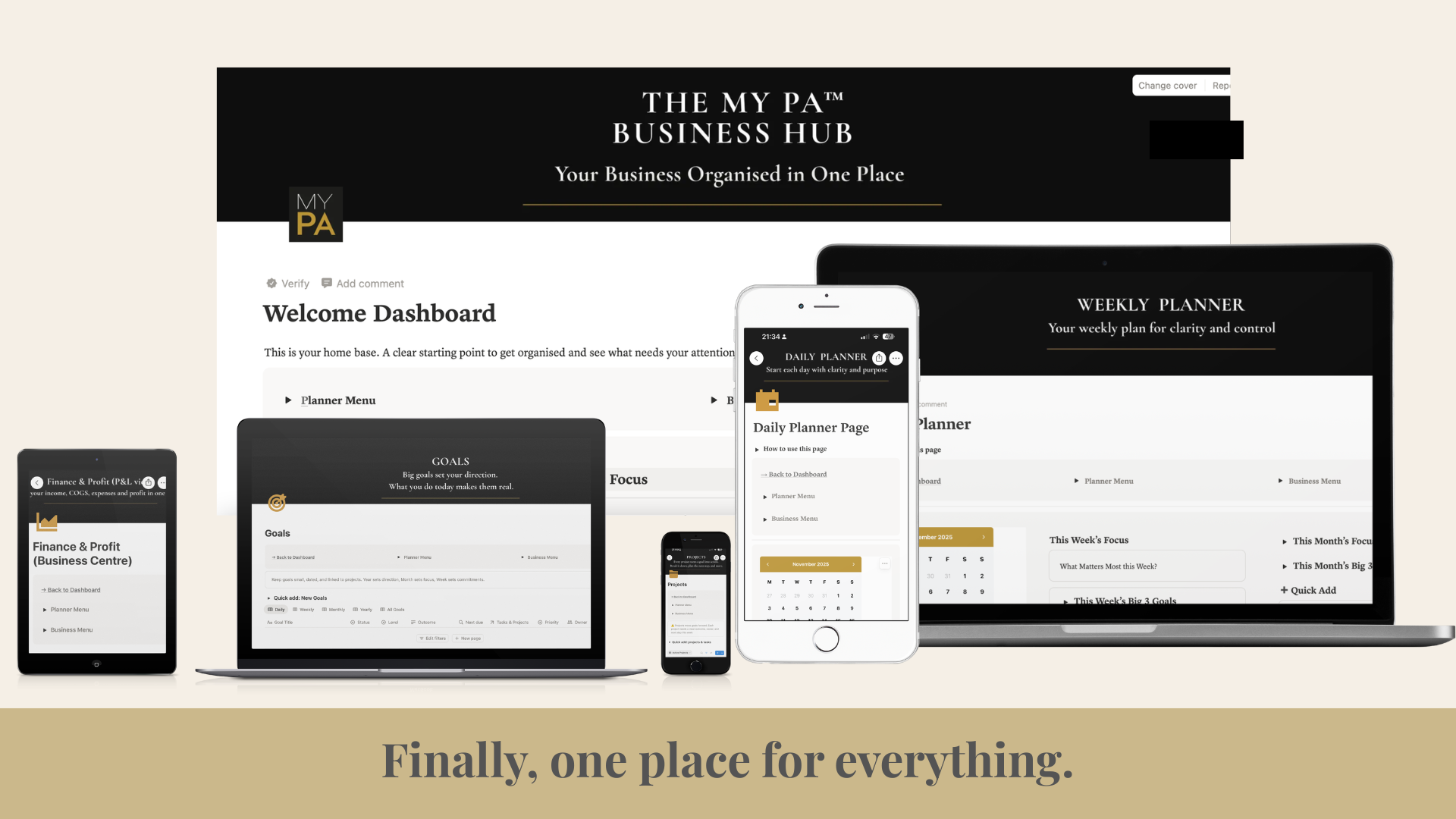
Get the Free Business PlannerIf you want a system that surfaces the right work automatically, the MY PA Business Hub brings this workflow together in one place so planning, projects, sales, client work, money, and priorities stay connected.
FAQs
What is a small business workflow?
A workflow describes how work moves from ideas and opportunities through to delivery, sales, and financial tracking so progress stays consistent.
Should I organise tasks or projects first?
Projects first. Projects create progress. Tasks support projects.
How often should I review my workflow?
Weekly reviews keep priorities aligned without constant reorganisation.