


If you're a founder, this will sound familiar.
You work all week. You're constantly thinking ahead. You solve problems other people don't even notice.
And yet, by Friday, there's a quiet feeling that you didn't do enough.
That guilt is confusing, because you weren't lazy. You didn't waste time. You worked nonstop.
So why does it still feel like you're behind?
The Problem Isn't Effort. It's Unrealistic Planning.
Most founders don't struggle because they lack motivation or discipline.
They struggle because they plan fantasy weeks.
Weeks where every hour is productive, nothing takes longer than expected, admin magically disappears, energy never dips, and life stays out of the way.
That week doesn't exist.
But when you plan as if it does, you create a gap between expectation and reality. And that gap is where guilt lives.
You end up measuring yourself against a version of the week you were never going to have. This is one of the most common patterns behind feeling busy but not productive.
Why Guilt Shows Up Even When You Work Hard
Founder guilt usually comes from one thing: you judge yourself based on what you planned, not what was actually possible.
You look at the unfinished list and think: "I should have done more."
But the list was never realistic in the first place.
So the guilt is misplaced. You're not failing. You're overestimating capacity.
Where AI Has Actually Helped Me
I've been using AI more recently — not to do more, but to be more honest.
Not to motivate myself. Not to create perfect plans. Just to reality-check my workload.
The shift was small, but surprisingly powerful.
Instead of asking AI to "help me prioritise," I started asking it to help me answer a different question: What is actually realistic for one person to complete this week?
How I Use It in Practice
First, I do a proper brain dump. Everything I want to do. Everything I think I should do. Everything I'm avoiding. No editing. No organising. Just the full list.
Then I give AI context most people skip: how many working hours I actually have, meetings and commitments already locked in, things that drain energy, and what genuinely needs to move forward.
Then I ask one simple question: "Based on this, what is realistic for one person to complete this week without burning out or cutting corners?"
The answer is usually humbling. And that's exactly why it helps.
It forces you to stop planning an ideal week and start planning the week you're actually going to live. If you want to take this further, our guide on how to use ChatGPT with your planner walks through more ways AI can support your planning.
The Unexpected Benefits: Less Guilt and Clearer Delegation
Two things happen when you do this.
First, the guilt eases. Because you stop comparing yourself to a fantasy version of the week. You're no longer failing an impossible standard.
Second, delegation becomes clearer. Once AI reflects back what's realistic, you can ask: "What shouldn't be done by me?" "What could be simplified?" "What can wait without real consequences?"
Instead of feeling like everything is your responsibility, you start seeing options. That alone removes a huge amount of mental load.
Why Writing It into a Planner Still Matters
AI helps with thinking. It helps with perspective. It helps with honesty.
But it doesn't create commitment.
That's where the planner comes in.
Once I've decided what's realistic, I write my non-negotiables into my planner and protect that time. Time blocking those priorities into specific slots is what turns a realistic plan into an actual week.
That step matters, because it stops the constant renegotiation in your head.
AI gives clarity. The planner makes it real.
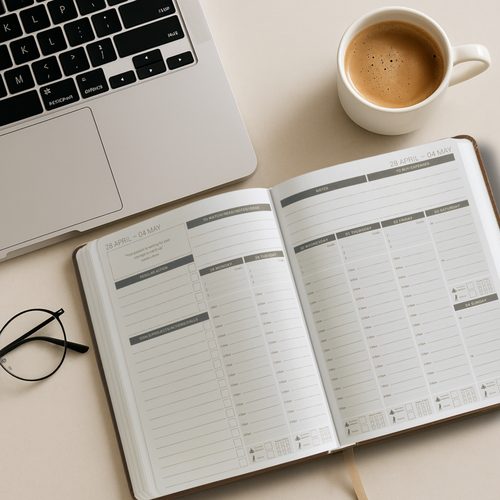
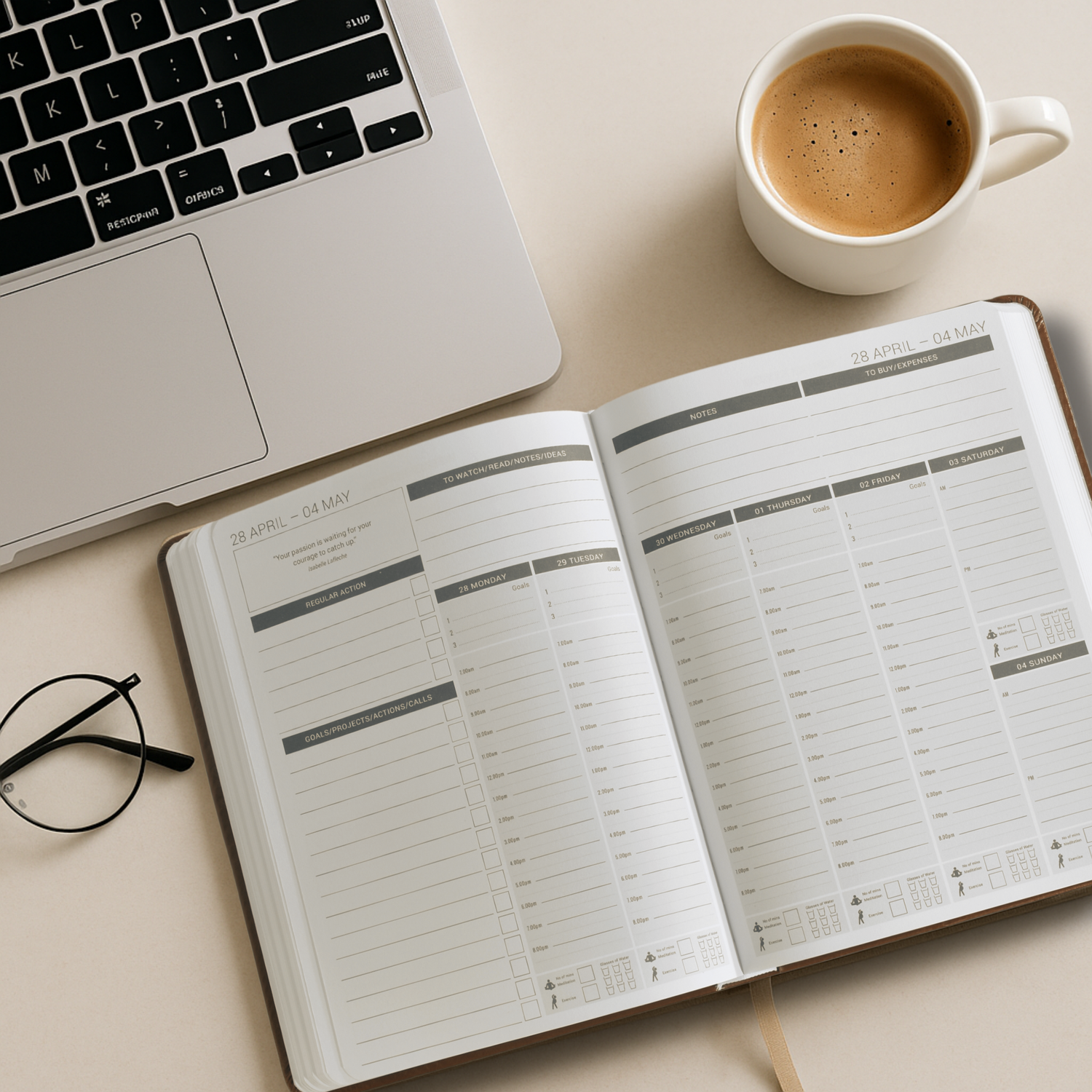
The MY PA Business Planner is designed around this exact flow — weekly reviews to reflect honestly on what happened, then weekly planning with time blocking to set a realistic week ahead. The structure keeps you grounded instead of chasing an impossible standard.
If Your Weeks Feel Full but Unfinished
This isn't about doing less for the sake of it.
It's about doing what's actually possible — and letting go of the rest without guilt.
If you've been ending weeks exhausted and disappointed despite working hard, try this once. Not to optimise. Not to push harder. Just to be honest about capacity.
You might be surprised how liberating that feels.
For more on building a mindset that supports sustainable progress, download our free CEO mindset guide. And if overwhelm is a regular pattern, our Entrepreneur Survival Guide covers practical strategies for pushing through the tough stretches.
Browse all our CEO Mindset articles for more.
Free resource: Plan your week clearly
Download the free Business Planner sample to map your week, choose priorities, and keep work moving.
Get the Free Business Planner