

Here's a thought experiment worth taking seriously.
Imagine you still had your 9 to 5. You're coming home tired, making dinner, doing life. And somewhere in between, you've carved out two hours, maybe 6am before everyone wakes up, maybe 9pm when the house goes quiet, to work on your business.
What would you actually do with those two hours?
Not what you'd want to do. Not what feels productive. What would you actually need to do to keep the thing moving?
I ask because a lot of people running businesses full-time are still acting like they have infinite time. They're doing tasks that feel important, redesigning the website, tweaking their logo, reorganising their folders, and wondering why growth feels slow.
The 2-hour constraint forces clarity. And clarity is exactly what most business owners are missing.
The Constraint Is the Point
When time is unlimited, everything feels equally important. You can spend a Tuesday afternoon on your Instagram bio and convince yourself it was a productive day.
But if you only have two hours? You can't waste them. The constraint cuts through the noise.
This is the same reason some of the most focused entrepreneurs you'll ever meet are people who built their businesses on the side. They had no choice but to be ruthless about what they spent their time on.
So let's run the thought experiment properly. Two hours. Every day. What gets those hours?
Hour One: The Thing That Brings in Money
If you only have two hours, hour one goes to revenue. Every single day.
That means something different depending on your business:
Writing content that drives traffic to your product
Following up with a lead or a past customer
Publishing a post that puts your offer in front of new people
Finishing the product or service you're selling
Sending the email your list has been waiting for
Not analytics. Not strategy documents. Not thinking about your brand. The thing that, if done consistently for 30 days, would put money in your account.
This feels obvious when you say it out loud. But most business owners, even full-time ones, don't actually spend an hour a day on direct revenue activity. They spend it on things that feel like work.
Hour Two: The Thing That Builds the Audience or the System
Hour two is the long game. You're either building the audience that buys from you in the future, or you're building the systems that make the business work without you being on top of everything all the time.
In practice, this looks like:
Writing a blog post that will rank on Google for the next two years — if you're not sure where to start, this guide to time blocking for entrepreneurs will help you protect that writing time
Recording a YouTube video that explains what you do better than any ad
Building out your email sequence so new subscribers get nurtured automatically
Setting up one process that saves you three hours next week
Researching the right keywords so your next six months of content actually gets found
The split isn't always exactly 60/60. Some days you'll spend 90 minutes on revenue and 30 on building. Some days it flips. The point is you're always doing both, not just whichever one feels easier that day.
And critically: everything else waits.
What Doesn't Get the Two Hours
This is where most business owners lose the most time, not to laziness, but to tasks that feel productive and aren't.
If you only had two hours, you would not spend them on:
Redesigning your website for the third time this quarter
Comparing tools you already have and don't need to replace
Perfecting a graphic for a post that isn't live yet
Reading about productivity instead of doing the work
Answering non-urgent emails at the start of your session
Reorganising your Notion workspace instead of shipping something
These are all real things. They all feel like work. And they all have a time and a place, just not during your two most important hours.
If you're running your business full-time and you're honest with yourself, how many of your hours today looked like this list?
The Weekly Structure That Makes It Work
Two focused hours a day only works if you know what you're walking into before you sit down. The moment you open your laptop and ask yourself "what should I work on?" that's already a bad sign. Decision fatigue kicks in, and you default to the comfortable stuff.
The fix is a simple weekly plan. Every Sunday (or Friday afternoon if that works better), decide:
What is the one revenue task for this week? (The thing that, if done, directly moves money)
What content am I publishing this week? (Blog post, video, email, pick one if needed)
What is the one operational task I've been avoiding that's quietly slowing things down?
What can I defer, delegate, or drop entirely?
Write those down. Put them somewhere visible. When you sit down for your two hours, you're executing, not deciding.
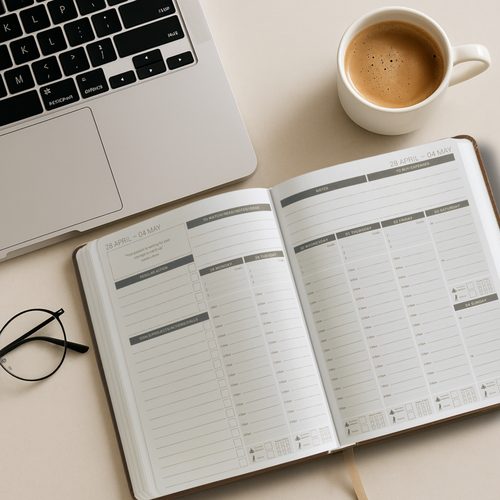
This is exactly the kind of structure the MY PA Planner is built around, weekly planning that maps your focus to what actually matters, not just what's loud.
The Honest Question
Here's the real point of the thought experiment.
If you only had two hours, you'd protect them like they were the only thing standing between you and your business dying. You'd be ruthless about what went in them. You'd say no to everything that didn't directly contribute. You'd plan before you started. You'd show up even on the days you didn't feel like it.
So why aren't you doing that now?
The answer isn't more time. Most business owners who feel stuck aren't short on hours, they're short on focus. They have six hours and use them like they have twenty. They have twenty and still feel behind.
Two focused hours beats eight scattered ones. Every time.
What's YOUR Needle Mover?
Here's the problem with most productivity advice. It assumes everyone's business is in the same place. It isn't.
The highest-leverage thing you can do in hour one depends entirely on where you are right now. So before you block your two hours, answer this honestly:
If you're still in a 9 to 5, your needle mover is the one thing that gets you out of it.
You don't have time to do everything, so you don't get to. Pick the single activity that moves you closest to the moment you can go full time. For most people that's one of three things: building an audience so there's demand when you launch, making your first or next sale to prove the idea works, or finishing the product so there's actually something to sell. Everything else waits. If you're at this stage, this guide on how to stay consistent when starting a business is worth reading alongside this one.
If you have no audience yet, your needle mover is visibility.
Getting in front of people who don't know you exist yet is the only job. That means showing your face. Short video, Reels, TikTok, YouTube Shorts. Nothing builds trust faster than a real person talking about something they actually know. One Reel that lands can do what six months of blog posts can't. If nobody knows you exist, content that sits on your website waiting to be found is not hour one work. Getting visible is.
If you have an audience but low sales, your needle mover is conversion.
You don't need more traffic. You need the traffic you already have to convert better. A stronger headline on your product page. A clearer call to action. Fixing the one confusing step in your checkout. Fifteen minutes on the right page can move more revenue than three new blog posts. Look at what's already coming in and ask why more of it isn't buying.
If you have sales but no repeat buyers, your needle mover is your existing list.
The people who already bought from you are the easiest sale you'll ever make. One email to past customers, a new product, an update, a "here's what I've been working on," can generate more in an hour than a week of chasing new traffic. If your two hours have nothing pulling in people who already trust you, that's the gap to fix first.
If you have all of the above, your needle mover is showing up consistently.
At this stage the strategy is usually right. What breaks it is inconsistency. Posting for two weeks then going quiet. Writing three blog posts then stopping for a month. Your hour one job is simply to show up, every day, in the place that's already working. Don't add new channels. Go deeper on what's moving.
The point isn't to do all of these. It's to know which one is yours right now, put it in hour one, and protect it like it's the only thing that matters. Because for this season of your business, it probably is.
Start With the Two-Hour Rule
Whether you're running your business full-time or fitting it in around a job, try this for the next two weeks:
Block two hours. The same two hours, every day.
Decide the night before exactly what you're working on.
Hour one: revenue. Hour two: building.
No email, no social media, no Slack until both hours are done.
Review on Friday: did the week move the needle, or just keep you busy?
That review question is the most important one. Busy and productive are not the same thing. The sooner you make peace with that, the faster your business grows.
Not sure which planner to use to structure those hours? Here are the best productivity planners for small business owners, ranked and reviewed.
Start your business without guessing
The Business Starter Kit gives you the plan, the pricing, and one place to run it, so you always know what to do next.
- Clear plan, step by step from idea to launch.
- Price for profit, know what to charge and what you will make.
- One Business HQ, run your entire business from one place from day one.
Start free, then choose the next step when you are ready.