
If you want to start a business with no money, a service business is the fastest way to get there.
No stock. No warehouse. No upfront investment. Just a skill, a customer, and the ability to deliver. You get paid for your time and expertise, and you can start earning from week one if you move quickly enough.
This guide walks you through choosing your service, finding your first clients, setting your prices, and building something that can grow — all without spending money you don’t have.
If you haven’t already, start with the full guide: How to Start a Business with No Money. This article goes deeper on the service-based route specifically.
Why a Service Business Is the Best Starting Point
When you have no money, product businesses are risky. You need to buy or create inventory, set up fulfilment, and spend money before you earn anything. If the product doesn’t sell, you’re out of pocket.
A service business flips that equation:
You sell before you build — a client says yes, then you deliver
Your costs are near zero — your time and skills are the product
You get paid quickly — often within days or weeks of starting
You learn fast — real client work teaches you more than any course
Many of the world’s biggest companies started as service businesses. The founder solved a problem for one person, then another, then another — and eventually turned that into something bigger. You don’t need to think beyond your first few clients right now.
Step 1: Choose a Service Based on What You Already Know
Don’t overthink this. The best service to start with is one you can deliver well, right now, without additional training.
Ask yourself:
What do people already ask me for help with?
What have I been paid to do in a job before?
What can I do that other people find difficult or time-consuming?
Common service businesses that cost nothing to start:
Social media management
Copywriting or content writing
Virtual assistance or admin support
Graphic design
Bookkeeping
Tutoring or coaching
Cleaning
Handyman work
Dog walking or pet care
If you want a longer list with more detail, browse our full guide on business ideas you can start with no money.
Step 2: Define a Clear Offer
A vague service is hard to sell. A specific one is easy.
The difference:
Vague: “I do social media.”
Specific: “I manage Instagram content for independent coffee shops — three posts a week, captions, hashtags, and a monthly report.”
When you get specific, three things happen: people immediately understand what you do, they can picture themselves buying it, and they can refer you to others because the description is memorable.
You don’t need to commit to this forever. Your offer will evolve as you learn what clients actually want. But starting with something clear and specific is far better than starting with something broad and vague.
Step 3: Set Your Price
Pricing is where most new service business owners get stuck. They either charge too little (because they feel inexperienced) or they spend weeks agonising over the “right” number.
Here’s a simple framework:
Research what others in your space charge — a quick Google or look at freelancer profiles gives you a range
Start at the lower end of that range if you’re brand new — but not so low that it devalues your work
Increase your prices as you gain experience, testimonials, and demand
Remember: your first price isn’t your forever price. It’s a starting point. The important thing is to start, not to get it perfect.
For a deeper dive into pricing strategies, read our guide on how to price your products and services.
Step 4: Find Your First Clients
You don’t need a marketing strategy. You need conversations.
Your first few clients will almost certainly come from one of these sources:
Your Existing Network
Tell people what you’re doing. Not in a sales-y way — just let them know. “I’ve started offering [service] for [type of person]. If you know anyone who might need help, I’d love an introduction.” People can’t refer you if they don’t know what you do.
Local Businesses
Walk into small businesses in your area and offer your service directly. This works especially well for cleaning, design, bookkeeping, and social media. Small business owners are busy and often grateful when someone offers practical help.
Online Communities
Facebook groups, LinkedIn, Reddit, and niche forums are full of people asking for help. Answer questions, provide value, and let your expertise speak for itself. When the time is right, mention what you do.
Freelance Platforms
Sites like Fiverr, Upwork, or PeoplePerHour can help you get your first few clients while you build direct relationships. The fees are a trade-off for access to people who are already looking to buy.
We’ve written a full guide on how to get your first customer without spending money that covers this in much more detail.
Step 5: Deliver, Learn, Improve
Your first few projects won’t be perfect. That’s fine. What matters is that you deliver good work, communicate well, and learn from each experience.
After every project, ask yourself:
What went well?
What took longer than expected?
What would I do differently next time?
What did the client actually value most?
This feedback loop is how you get better, faster. Within a few months, you’ll be more confident, more efficient, and able to charge more.
Step 6: Build Systems (So You Can Grow)
Once you’ve got a few clients and a rhythm, the next challenge is staying organised. Juggling multiple clients, deadlines, and tasks without a system leads to missed commitments and stress.
Start simple:
Use a planner or task manager to track what’s due and when
Create templates for recurring tasks (proposals, invoices, onboarding emails)
Set up a basic system for tracking leads and follow-ups
Review your week every Sunday or Monday — what’s coming, what needs attention
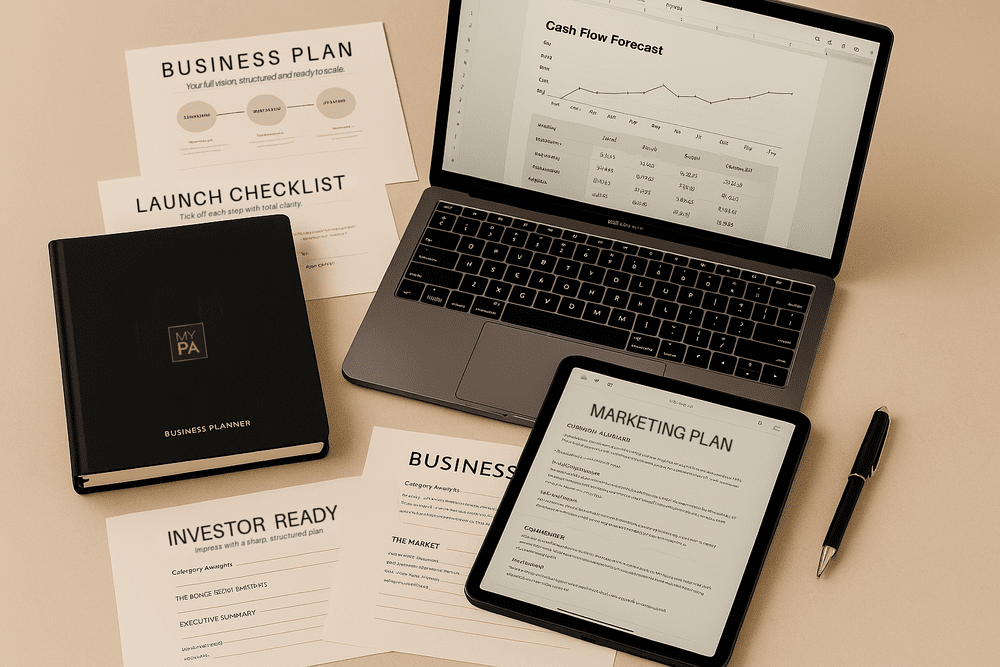
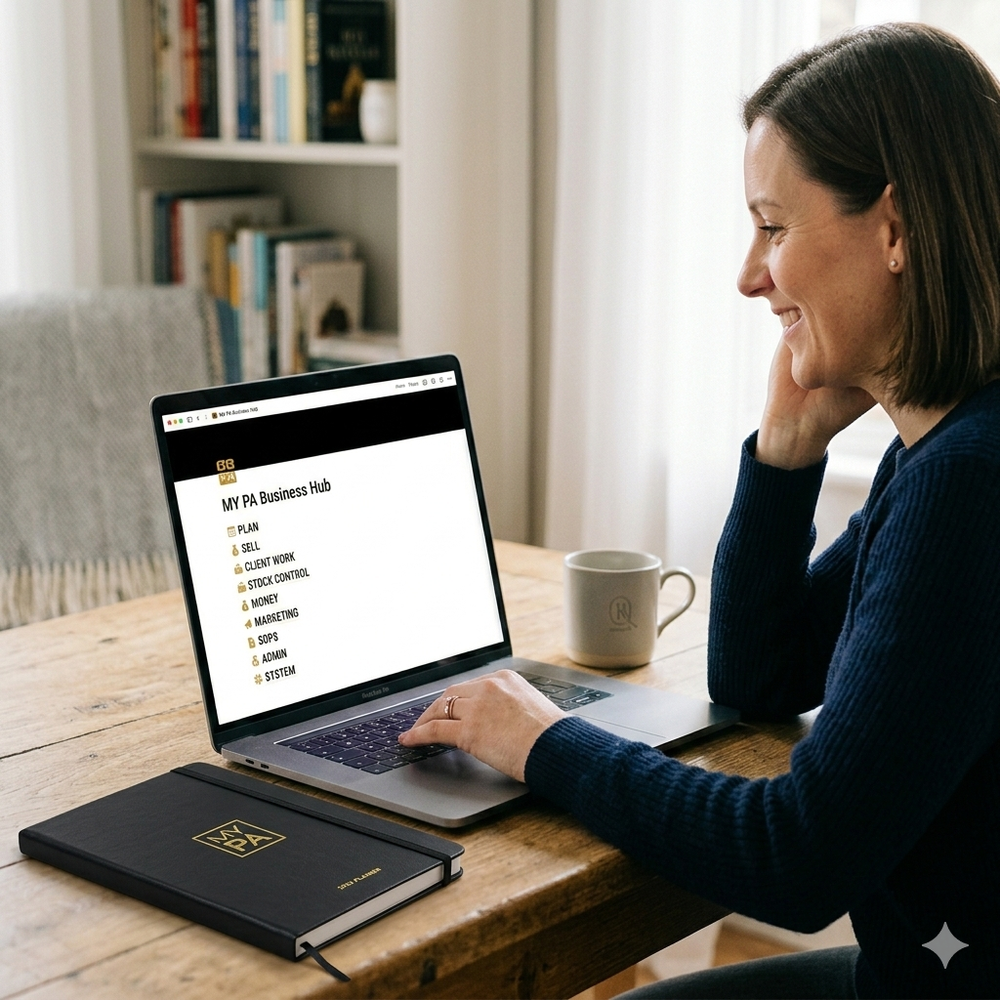
If you want a ready-made system for this, the MY PA Business Starter Kit includes planning templates, a cash flow tracker, and a simple structure designed for exactly this stage. Or for a hands-on weekly system, the 2026 MY PA Business Planner walks you through it.
When to Go Beyond Services
Not every service business needs to become a product business. Many people build excellent, profitable companies delivering services for years.
But if you do want to scale beyond your own time, a service business is a great launchpad. The patterns you learn — finding customers, delivering value, managing cash flow — apply to every business model. You can eventually add:
Digital products (templates, guides, courses based on your expertise)
Subcontractors (so you can take on more work without doing it all yourself)
Productised services (fixed-scope, fixed-price packages that are easier to sell and deliver)
But don’t rush this. Master the service first. Everything else builds on that foundation.
Start with a Service, Build from There
A service business is the simplest, fastest, lowest-risk way to start earning money. You don’t need a website, a brand, or a business plan. You need a skill, a clear offer, and the willingness to reach out to people.
Find your service. Set your price. Get your first client. Deliver well. Repeat.
For the full roadmap on building a business from nothing, read: How to Start a Business with No Money (Step-by-Step Guide). And when you’re ready to get structured, browse our full library of startup tips and resources.
Start your business without guessing
The Business Starter Kit gives you the plan, the pricing, and one place to run it, so you always know what to do next.
- Clear plan, step by step from idea to launch.
- Price for profit, know what to charge and what you will make.
- One Business HQ, run your entire business from one place from day one.
Start free, then choose the next step when you are ready.