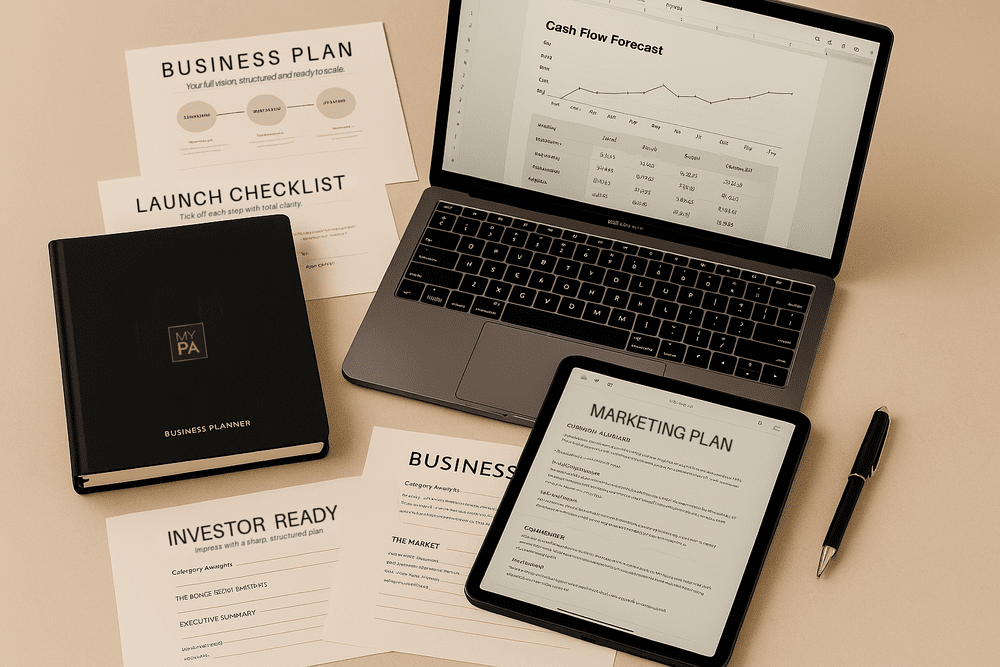


A business plan is a written document that describes what your business does, who it serves, how it makes money, and how you plan to grow it.
But here's the honest truth most business advice glosses over: you don't need a 40-page document with financial projections and market analysis charts to start a business.
What you need is clarity.
Clarity on:
What problem you're solving
Who you're solving it for
How you'll reach them
How you'll make money
What you need to do first
A good business plan, even a one-page version, forces you to answer those questions before you spend time, money, or energy going in the wrong direction.
What to Include in a Business Plan
Whether you're writing a full business plan or a one-page version, these are the core sections every plan needs:
1. Business Overview
What does your business do? Keep this to 2-3 sentences. If you can't explain it simply, you don't know it clearly enough yet.
2. The Problem You Solve
What pain, frustration, or need does your business address? Be specific. "I help busy entrepreneurs stay organised" is weaker than "I help freelancers who lose track of clients and miss deadlines get a simple system that keeps them on top of everything."
3. Your Target Customer
Who exactly is your customer? Not "women aged 25-45" — that's too broad. Think about: what do they do for work, what's their biggest frustration, what do they read, where do they hang out online, what have they tried before that didn't work?
4. Your Solution & Offer
What do you sell and how does it solve the problem? Include pricing if you know it.
5. How You'll Reach Customers (Marketing & Sales)
Where will you find customers? Social media, SEO, paid ads, referrals, partnerships? Be realistic about where your attention will go.
6. Revenue Model
How does the business make money? One-off sales, subscriptions, services, digital products? What's your average order value and how many sales do you need per month to be profitable?
7. Basic Financial Projections
What are your costs? What revenue do you need to break even? What's your 6-month and 12-month revenue goal? You don't need to be an accountant, even rough numbers give you a target to aim for.
8. Next Steps & 90-Day Plan
What are the first 3 things you need to do to move forward? A business plan without action is just a document. If you're not sure where to start, this guide on how to start a business with no money walks you through the first steps.
Types of Business Plans — Which One Do You Need?
One-Page Business Plan
Best for: New businesses, idea validation, solo founders. Length: One page. When to use it: When you're just starting out and need to get clear fast. Also great for reviewing and updating your direction each quarter.
This is where most entrepreneurs should start. Download ours free above.
Traditional Business Plan
Best for: Applying for bank loans, seeking investors, government grants. Length: 10-30 pages. When to use it: When a third party (bank, investor, grant body) needs to see detailed financials, market research, and formal structure.
Lean Business Plan
Best for: Early-stage startups, testing ideas quickly. Length: 1-5 pages. When to use it: When you want something more detailed than a one-pager but don't need the full formal version yet.
Business Plan for Investors
Best for: Raising funding from angel investors or VCs. Length: 15-25 pages plus pitch deck. When to use it: When you're actively seeking investment and need to demonstrate market size, competitive advantage, team credentials, and financial projections.
Business Plan Examples — What Do They Actually Look Like?
The best way to understand what goes into a good business plan is to see what one looks like in practice.
Example: Service Business (Freelance Designer)
Business: Branding design for e-commerce brands. Problem: E-commerce founders struggle to build a brand that looks professional and consistent across their website, social media, and packaging. Customer: Female founders of product-based businesses, 6-18 months in, turning over £2-10k/month, feeling embarrassed by their DIY branding. Offer: Brand identity package, logo, colour palette, fonts, brand guidelines, £1,200 one-off. Marketing: Instagram, Pinterest, referrals from web designers. Revenue model: 4 clients per month = £4,800/month revenue. 90-day goal: Land first 3 paying clients via warm outreach and portfolio building.
Example: Product Business (Digital Planner)
Business: Digital business planners for iPad and e-ink devices. Problem: Entrepreneurs buy planners designed for students or personal use that don't reflect how running a business actually works. Customer: Entrepreneurs, freelancers, coaches and small business owners who want a structured planning system built around their business. Offer: Digital PDF planner, one-off purchase, instant download. Marketing: SEO, YouTube tutorials, Pinterest, Google Ads. Revenue model: Volume-based, 100 sales/month at £35 average = £3,500/month. 90-day goal: Grow organic search traffic to 5,000 visits/month.
Example: Coaching Business
Business: Business coaching for new entrepreneurs. Problem: First-time business owners waste months making avoidable mistakes because they don't have experienced guidance. Customer: People who've recently left corporate jobs to start a business, overwhelmed, unsure where to focus. Offer: 6-week 1:1 coaching programme, £1,500. Marketing: LinkedIn content, podcast guest spots, referrals. Revenue model: 4 clients per month = £6,000/month. 90-day goal: Fill first cohort of 4 clients from existing network.
Common Business Plan Mistakes to Avoid
Writing it for investors when you don't need investors. Most small businesses don't need outside investment. Writing a 30-page plan when you need a one-pager wastes weeks and delays action.
Being vague about your customer. "Anyone who wants to be more productive" is not a customer. The more specific you are about who you serve, the easier every other decision becomes.
Ignoring the numbers. You don't need a finance degree. But you do need to know: what does it cost to run the business each month, how many sales do you need to cover that, and is that realistic?
Treating it as a one-time document. Your business plan should be reviewed every quarter. Markets change, your offer evolves, your customer gets clearer. A plan from 18 months ago is probably already outdated.
Confusing a business plan with a to-do list. A business plan describes what your business is and where it's going. Your to-do list is how you get there day by day. You need both.
How to Write a Business Plan — Step by Step
Step 1: Start with the problem, not the product. What problem exists in the world that your business solves? Write this down in plain language before you write anything else.
Step 2: Get specific about your customer. Write a paragraph describing one real person who would buy from you. Give them a name if it helps. What do they struggle with? What have they tried before? What would they search for online?
Step 3: Define your offer clearly. What exactly do you sell? What's included? What's the price? How is it delivered?
Step 4: Map out how you'll find customers. Pick 2 channels maximum to start. Trying to be everywhere at once is the fastest route to burnout and slow growth. If one of those channels is content or organic search, this post on how to get your first customer without spending money covers exactly where to focus first.
Step 5: Do the basic maths. Monthly costs + desired salary, divided by your average sale price = number of sales you need per month. Is that realistic in the next 6 months?
Step 6: Write your 90-day action plan. What are the 10 most important things you need to do in the next 90 days to move the business forward? Prioritise ruthlessly.
Step 7: Put it in writing. Use our free one-page template above to capture everything in a format you'll actually refer back to.
Business Plan Template for Different Business Types
Business Plan Template for Startups
Focus on: problem validation, market size, competitive landscape, team, and financial projections. Investors want to see you understand the market and have a credible plan to capture a slice of it.
Business Plan Template for Small Businesses
Focus on: clear offer, target customer, marketing channels, and basic financials. Keep it practical and action-oriented rather than theoretical. For a complete breakdown of how to plan your business year once the plan is written, this step-by-step guide to planning your business year picks up where the template leaves off.
Business Plan Template for Freelancers
Focus on: services offered, ideal client profile, pricing, how you'll find clients, and income targets. Keep it to one page, your time is better spent on client work than writing essays.
Business Plan Template for Online Businesses
Focus on: traffic strategy, conversion rates, digital marketing channels, product/service delivery, and scalability. Include metrics like monthly visitors, conversion rate, and average order value.
Business Plan Template UK
The core structure is the same as any business plan. UK-specific sections to consider: VAT registration threshold (if your revenue will exceed the current threshold), Companies House registration, HMRC obligations, and any industry-specific regulations.
From Business Plan to Execution — The Missing Step
Writing a business plan is just the beginning.
The gap between a plan and a successful business is execution, showing up consistently, making decisions quickly, and staying focused on what actually matters this week. If you're fitting your business around a job or limited hours, this post on what to do with just 2 hours a day is worth reading before anything else.
Still on the fence about whether you even need one? Read do you really need a business plan? for an honest take.
That's where the MY PA Planning System comes in.
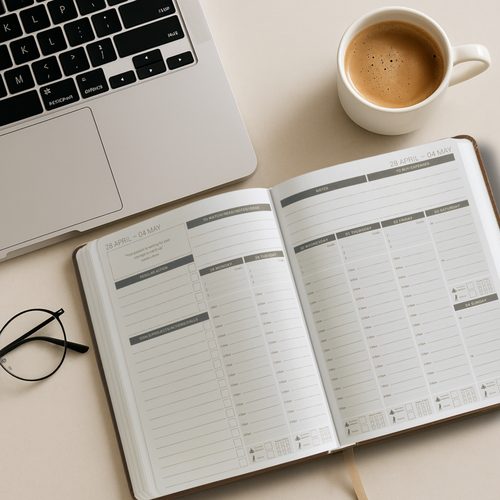
The MY PA Business Planner bridges the gap between your big-picture plan and your daily work. Each week, you'll review your goals, plan your priorities, and time-block your schedule, so the actions in your business plan actually get done. Not sure which format suits you best? Here's how paper planners and digital planners compare for business owners.
The MY PA system includes:
Annual goal-setting aligned to your business plan
Quarterly planning to break big goals into 90-day sprints
Weekly planning with time-blocking
Daily focus pages
Revenue and project tracking
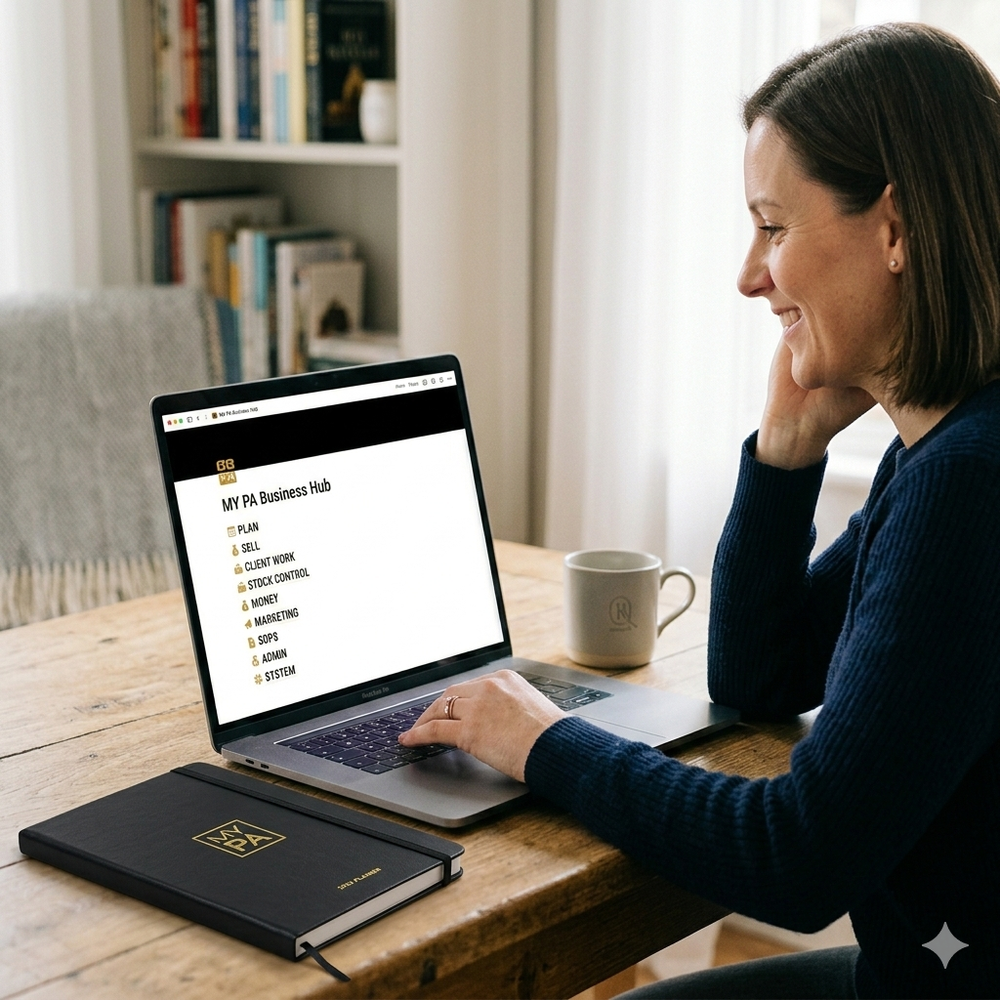
Available as a physical planner, digital PDF (for iPad, reMarkable, Kindle Scribe, and Onyx Boox), and a full Notion business system.
👉 [Shop the MY PA Business Planner]
👉 [Download Free Business Planner]
👉 [Explore the Business HQ Notion System]
Frequently Asked Questions
Do I need a business plan to start a business? You don't legally need one, but you absolutely should have one. Even a one-page plan forces clarity on your idea, customer, and numbers, which saves you months of wasted effort going in the wrong direction.
How long should a business plan be? For most small businesses and solopreneurs, one to five pages is enough. You only need a longer formal plan (10-30 pages) if you're applying for a bank loan or seeking outside investment.
Is a business plan template free? Yes, download our free one-page business plan template above. It's instant, no email required.
Can I write a business plan myself? Absolutely. You don't need to hire anyone. The most important thing is that it reflects your honest thinking about the business, not what you think sounds impressive. Use our template and guides above to get started.
What's the difference between a business plan and a business model? A business model describes how your business creates and captures value, essentially how it makes money. A business plan is broader, covering your goals, market, operations, and financials as well as your business model.
How often should I update my business plan? Review it every quarter. Major updates annually. If something significant changes, new product, new market, pivot in direction, update it immediately.
What should a business plan include for a small business? At minimum: business overview, target customer, problem you solve, offer and pricing, marketing channels, basic financial projections, and a 90-day action plan.
MY PA Planner helps entrepreneurs and small business owners plan, execute, and grow — with physical planners, digital PDF planners, and Notion business systems. Based in the UK, serving customers worldwide.
Ready to write yours? Download our free one-page business plan template
Start your business without guessing
The Business Starter Kit gives you the plan, the pricing, and one place to run it, so you always know what to do next.
- Clear plan, step by step from idea to launch.
- Price for profit, know what to charge and what you will make.
- One Business HQ, run your entire business from one place from day one.
Start free, then choose the next step when you are ready.