This is one of the most common questions we get asked, and the honest answer is: neither is objectively better. They’re different tools with different strengths, and the right choice depends entirely on how you work.
But that non-answer doesn’t help you decide. So this guide breaks down both options honestly — what each does well, where each falls short, and how to choose based on your actual planning habits, not someone else’s opinion.
The Case for Paper Planners
Tactile Experience
There’s something about physically writing on paper that engages your brain differently. Research consistently shows that handwriting improves memory and comprehension compared to typing. When you’re writing your goals and priorities by hand, you’re processing them more deeply.
Zero Distractions
A paper planner has no notifications, no battery, and no app updates. You open it, you write, you close it. There’s no risk of getting pulled into something else. For people who struggle with focus, this simplicity is powerful.
No Technology Barrier
Everyone knows how to use a paper planner. No setup, no file transfers, no learning curve. You buy it, you start writing. For people who aren’t tech-confident, this removes a significant friction point.
Physical Presence
A paper planner sitting on your desk is a visual reminder to plan. It’s harder to ignore than an app you might not open. Many people find that having a physical object in their workspace keeps planning front of mind.
Where Paper Falls Short
Fixed layouts — if you outgrow a section or need more space, you’re stuck
No search or navigation — finding something from three months ago means flipping through pages
Only one copy — if you lose it, everything is gone
Heavy to carry — a year-long planner with daily pages is thick
Annual replacement — you need a new one every year and there’s no carrying forward
The Case for Digital Planners
Flexibility
Digital planners can be used across multiple devices — iPad, Kindle Scribe, reMarkable, Onyx Boox — and your planner goes wherever your device goes. If you lose your device, the file is backed up. You can start fresh without buying anything new.
Hyperlinked Navigation
A good digital planner lets you jump between months, weeks, and daily pages with a single tap. No flipping through 200 pages to find the right week. This makes the planning experience faster and more fluid, especially for planners with lots of sections.
Infinite Undo
Made a mistake? Erase it cleanly. Changed your priorities? Update the page without crossing things out. Digital planners stay clean and readable in a way that heavily-used paper planners can’t.
E-Ink Devices Bridge the Gap
This is the development that changed the digital vs paper debate. E-ink devices like Onyx Boox, Kindle Scribe, and reMarkable give you the writing feel of paper with the navigation and flexibility of digital. You’re still handwriting with a stylus — but with hyperlinks, easy erasing, and cloud backup.
If you’ve never tried planning on e-ink, our guide on how to use Onyx Boox for business planning shows what the experience is actually like.
Where Digital Falls Short
Setup required — you need to transfer files, choose an app, configure settings
Device cost — e-ink devices range from £180 to £550, plus the planner itself
Battery dependency — even though e-ink lasts weeks, it still needs charging eventually
Screen glare — some devices in some lighting conditions are less pleasant than paper
Less personal — paper planners can feel more “yours” with stickers, colours, and physical customisation
Which Should You Choose?
Choose a paper planner if you prefer simplicity above everything, you like the ritual of physical writing, you don’t want to deal with any technology, and you plan in one location (home office or desk).
Choose a digital planner if you want fast navigation between sections, you plan across multiple locations, you like the idea of handwriting but want digital backup, or you’re already using an e-ink device.
Choose both if you want a physical planner for daily use at your desk and a digital backup for when you’re on the move. Many people find this combination works better than committing to one format entirely.
What Actually Matters More Than the Format
Here’s the truth: the planner format matters far less than whether you actually use it.
The best planner is the one that fits into your life in a way that you’ll open it every day. If paper makes you more likely to plan, use paper. If digital makes it easier, use digital. If e-ink gives you the best of both, use that.
What actually makes planning work is:
A consistent rhythm — planning at the same time each week
A clear structure — goals, priorities, daily actions
A weekly review — so you learn and adjust
Those three things matter more than any device or format decision.
Try Both
If you’re genuinely unsure, try both. Use a paper planner for a month, then switch to digital for a month, and see which one you reach for more naturally. Your planning style is personal — no article can tell you what works for your brain.
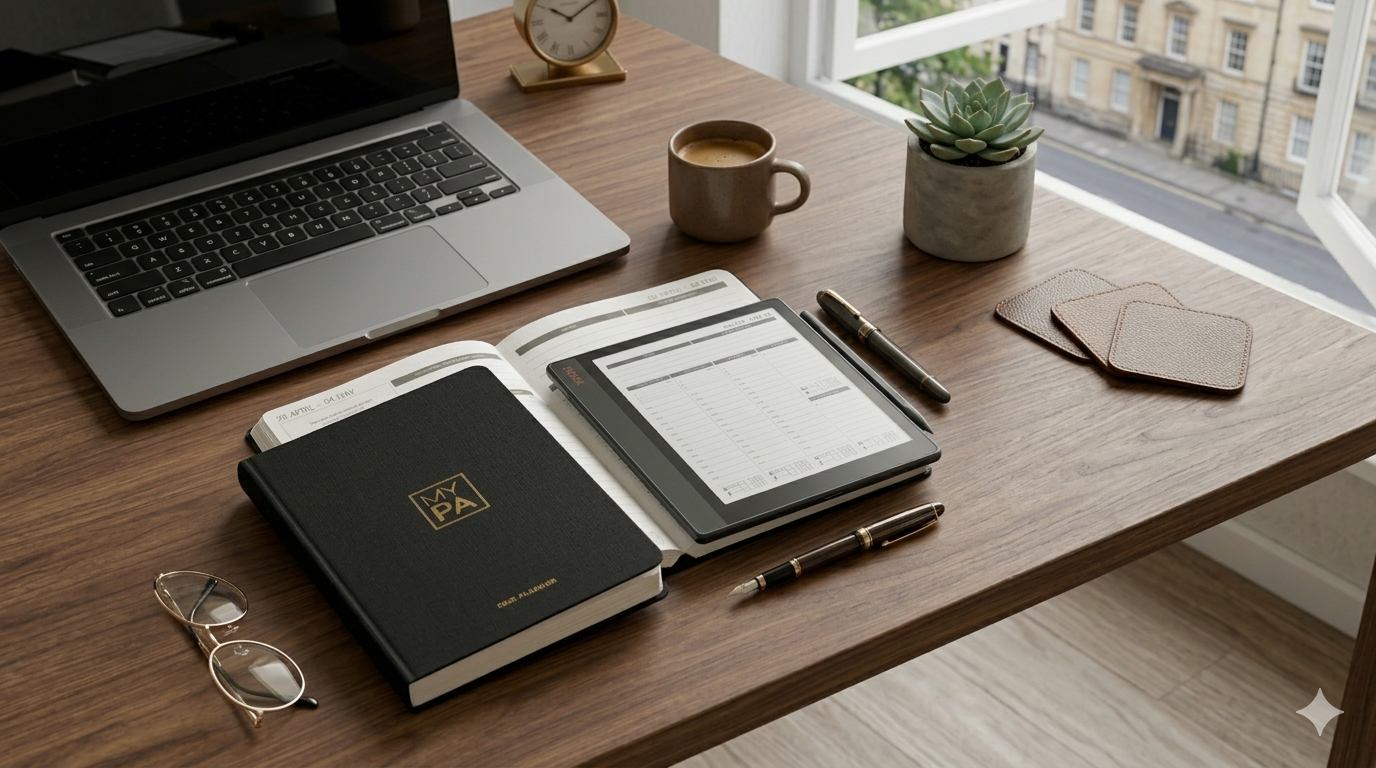
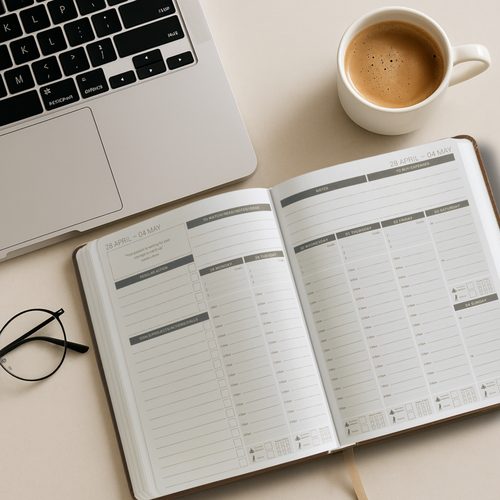
We make both: the MY PA Business Planner is a physical planner for your desk, and the MY PA Digital Business Planner is the same system in hyperlinked PDF format for e-ink devices. Same structure, different format — so you can switch without losing your workflow.
Start your business without guessing
The Business Starter Kit gives you the plan, the pricing, and one place to run it, so you always know what to do next.
- Clear plan, step by step from idea to launch.
- Price for profit, know what to charge and what you will make.
- One Business HQ, run your entire business from one place from day one.
Start free, then choose the next step when you are ready.