
Most people think starting a business requires money. A loan. Savings. Maybe investors.
It doesn’t.
But it does require a completely different approach — and this is where most people get it wrong. They spend months building a website, designing a logo, and planning a launch for something nobody has asked for. Then they wonder why nothing happens.
If you don’t have money, you can’t afford to build first. You have to sell first.
This guide will show you how to start a business with no money — step by step — in a way that’s realistic, practical, and actually works. No motivational fluff. No ‘passive income’ fantasy. Just a clear path from where you are to your first paying customer and beyond.
1. Start with What You Can Already Do
You don’t need a groundbreaking idea. You need something useful that someone will pay for.
The fastest way to start a business with no money is to begin with a skill you already have. That might be writing, design, bookkeeping, social media management, admin support, coaching, tutoring, or even just being very organised.
It doesn’t need to be perfect. It doesn’t need to be unique. It just needs to solve a real problem for a real person.
Businesses aren’t built on perfect ideas. They’re built on solving problems. The simpler the problem, the faster you can start.
If you’re stuck on what to offer, we’ve put together a full list of business ideas you can start with no money — all service-based, all realistic, all free to launch.
2. Don’t Build a Business — Get One Customer
This is where most people go wrong.
They start with the stuff that feels productive but doesn’t actually generate income: a website, a logo, business cards, social media profiles with zero followers. They spend weeks setting things up and never make a single pound.
Instead, focus on one thing: getting your first paying customer.
That might mean reaching out to someone you know who needs help. It might mean posting in a local Facebook group or offering your skill on a freelance platform. It might mean walking into a small business and saying, “I can help you with this.”
If nobody is willing to pay, you don’t have a business yet. And that’s fine — it means you need to adjust your offer, not spend more money.
Before you invest any more time in setup, make sure you’ve validated your business idea with real people, not just friends and family.
3. You Don’t Need a Website (Yet)
Another common mistake. People think everything needs to be set up before they can start. It doesn’t.
To start a business with no money, you need two things: a way to communicate and a way to explain what you offer. That’s it.
You can start with a free email account, an Instagram profile, or a LinkedIn page. That’s enough to begin conversations, build relationships, and close your first sale.
A website comes later — once people are already interested. When you’re ready, simple tools like Squarespace or Carrd can get you a clean page in a few hours. But a website is not step one. Conversations are step one.
4. Build a Simple Offer
Don’t overthink this. You need three things:
What you’re offering
Who it’s for
What result you help them achieve
Instead of saying “I do social media,” say “I help small businesses get consistent leads through Instagram content.” Instead of “I’m a bookkeeper,” say “I help freelancers stop worrying about tax by keeping their numbers clean and simple.”
Clear sells. Vague doesn’t.
If you’re not sure how much to charge, read our guide on how to price your products and services. Pricing is one of the biggest blockers for new business owners, and getting it wrong early can hold everything back.
5. Start Before You Feel Ready
Your first version should be messy. Your first customer experience won’t be perfect. Your first offer will probably change three times before it sticks.
That’s normal. That’s how every business starts.
The people who wait until everything is perfect are the people who never start. Waiting feels safe, but it’s actually the riskiest thing you can do — because time passes, confidence drops, and that business idea stays in your head forever.
Launch ugly. Learn fast. Improve as you go.
If you’re prone to overthinking and putting things off, you’re not alone. We’ve written a detailed guide on how to beat procrastination that breaks down exactly why we delay and how to push through it.
6. Don’t Quit Your Job (Not Yet)
One of the biggest mistakes people make when starting a business is quitting their job too early. It sounds exciting — “I’m going all in” — but it puts you under pressure to make money fast, and that usually leads to bad decisions.
Instead, keep your 9–5 and build alongside it. Your job funds your business while you figure things out. It gives you breathing room to test ideas, make mistakes, and learn without the panic of unpaid bills.
Read the full guide on how to start a business while working a 9 to 5 for a detailed breakdown of how to manage your time, build discipline, and transition at the right pace.
You Only Need 1–2 Hours a Day
You don’t need full days. You need focused time.
That might look like one hour in the evening building your offer, 30 minutes reaching out to potential clients, and 30 minutes improving your work. Done consistently, this compounds quickly.
Going to bed earlier. Waking up with intention. These small shifts create the time you need to build something of your own.
Your goal isn’t to escape your job overnight. Your goal is to replace it — step by step.
If you want a structured way to make the most of limited time, time blocking is one of the most effective techniques for entrepreneurs who are building alongside other commitments.
7. Reinvest What You Earn
Once you make your first money — and you will, if you follow this process — don’t spend it.
Reinvest it into improving your offer, learning new skills, or getting better tools. This is how you go from “side project” to “real business.” Your first £100 becomes your marketing budget. Your first £500 buys you better software or a proper domain. Your first £1,000 gives you options.
Understanding how money flows in and out of your business is critical at this stage. If you’re new to managing finances, our cash flow guide for small businesses explains the basics in plain English.
8. Add Structure (This Is Where Most People Fail)
Starting is one thing. Staying consistent is another.
Most people don’t fail because their idea was bad. They fail because they don’t stay organised, they lose focus, and they don’t follow through. The excitement of starting fades, and without a system in place, everything drifts.
At this stage, you don’t need a 50-page business plan. You need a simple system that keeps your goals, priorities, and daily actions in one place.
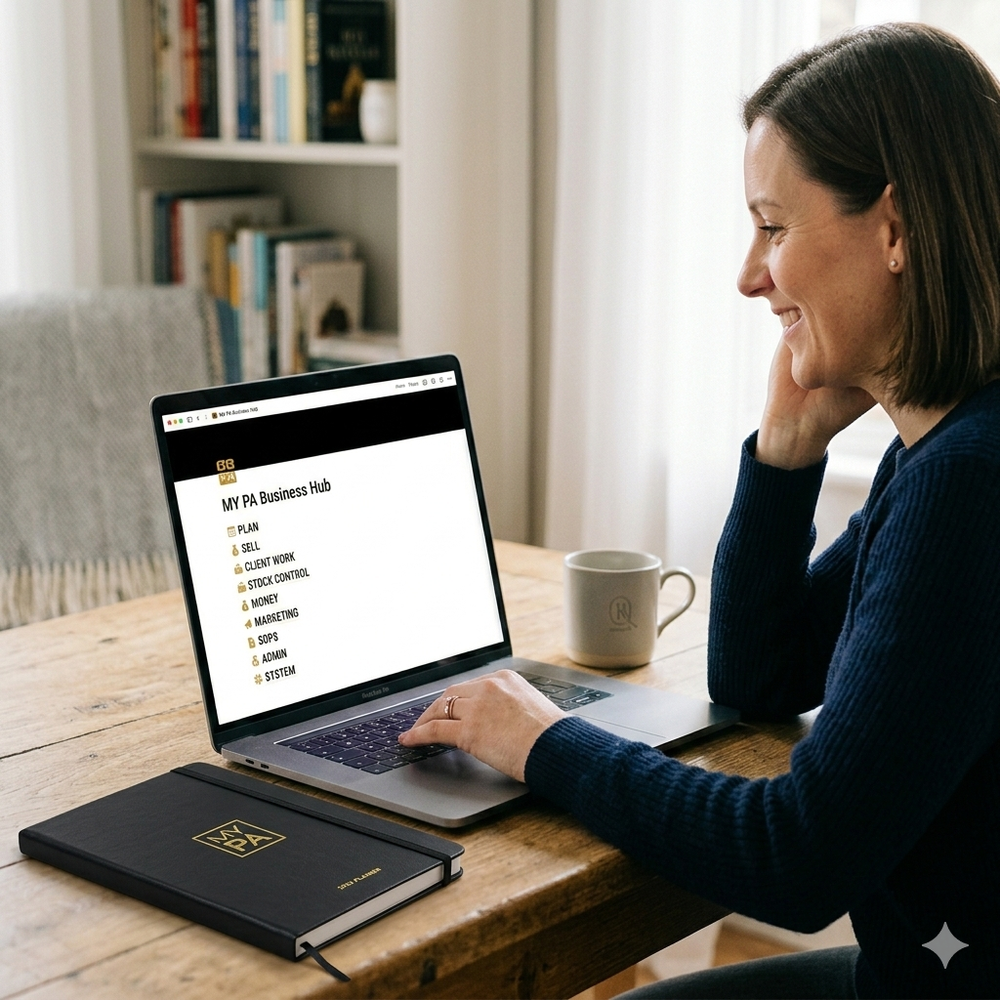
This is where having a structured way to plan your business makes a huge difference. Whether that’s a physical planner, a digital system, or a combination of both, the important thing is that you’re writing things down and reviewing them regularly.
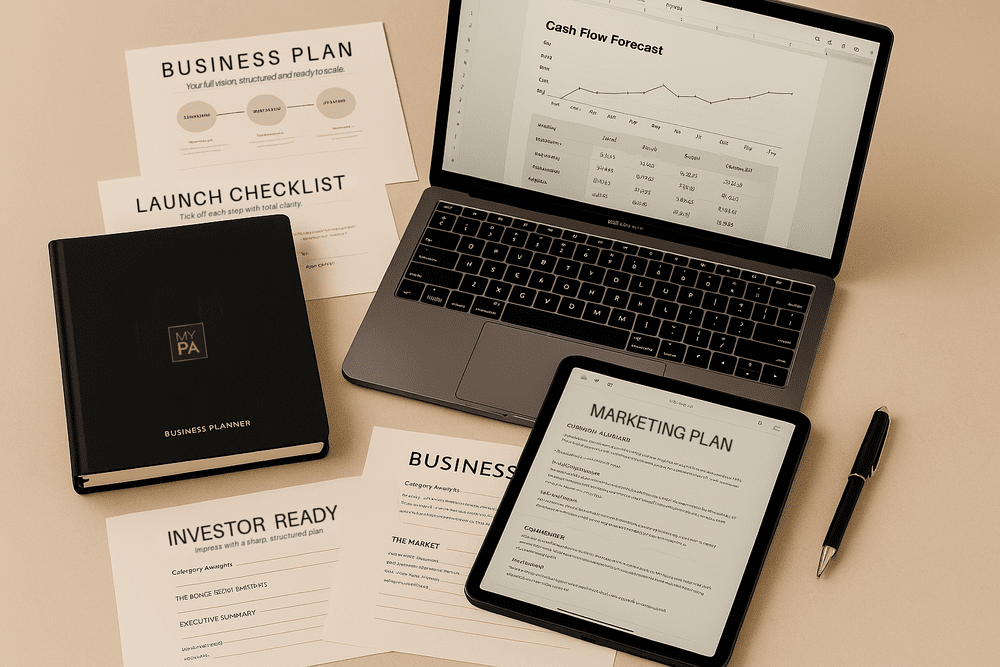
If you’re not sure where to start with planning, the MY PA Business Starter Kit gives you everything you need to plan your first 90 days — including goal-setting templates, a cash flow tracker, and a simple action planner. Or if you prefer a physical planner that walks you through the process week by week, take a look at the 2026 MY PA Business Planner.
We’ve also written a full article on how to stay consistent when starting a business — because consistency, not motivation, is what separates the businesses that survive from the ones that don’t.
9. Know What to Do Next
Once you’ve got your first customer and a bit of momentum, the path opens up. But it can also get overwhelming if you don’t know what to focus on.
Here’s a simple way to think about your next moves:
If you’re not sure what to offer, explore these business ideas you can start with no money
If you need to sharpen your offer, learn how to validate a business idea
If you’re struggling with pricing, read how to price your products and services
If you want a full launch checklist, use our business launch checklist
If you want to go from idea to action, try the 5-step framework for execution
Each of these guides is designed to work alongside this article, so you can go deeper on the areas where you need the most help.
Starting a Business with No Money Is Not About Cutting Corners
It’s about doing things in the right order.
Don’t build first. Don’t wait for perfect. Don’t quit too early.
Start with a skill. Get one customer. Deliver well. Reinvest. Add structure. Keep going.
That’s how real businesses are built — not with money, but with clarity, consistency, and a willingness to start before you feel ready.
If you want more practical guides on building and running a business, browse our full startup tips and resources or explore the productivity and planning hub for tools and systems to keep you on track.
Start your business without guessing
The Business Starter Kit gives you the plan, the pricing, and one place to run it, so you always know what to do next.
- Clear plan, step by step from idea to launch.
- Price for profit, know what to charge and what you will make.
- One Business HQ, run your entire business from one place from day one.
Start free, then choose the next step when you are ready.