

Because staying organised shouldn’t feel like a luxury.
When I created this planner, I wasn’t trying to build a product.
I was trying to survive a season of chaos — and I needed something that helped.
Something that felt supportive. Centring.
Something I could turn to even on the hardest days.
Something that didn’t add pressure — but helped take it off.
I couldn’t find it.
So I built it.
Because staying organised shouldn’t feel like a luxury — or something only “other people” are good at.
And what if your planner didn’t feel like a chore?
What if it felt like a best friend — one that’s got your back even when your brain feels like 42 tabs are open?
That’s what a great planner should be.
Not just a pretty notebook.
Not just a place for goals you’ll forget in three weeks.
But something solid. Supportive. Grounding.
Like a quiet kind of accountability that’s always there — without the guilt.
How to use your planner through the day
| When | What to do |
|---|---|
| Morning | Start with intention and set your anchor for the day |
| During the day | Use it to pivot, not panic, when plans change |
| Evening | A quick check-in: what worked, what didn't, where your energy went |
| Over time | Notice what's working and stop feeling constantly behind |
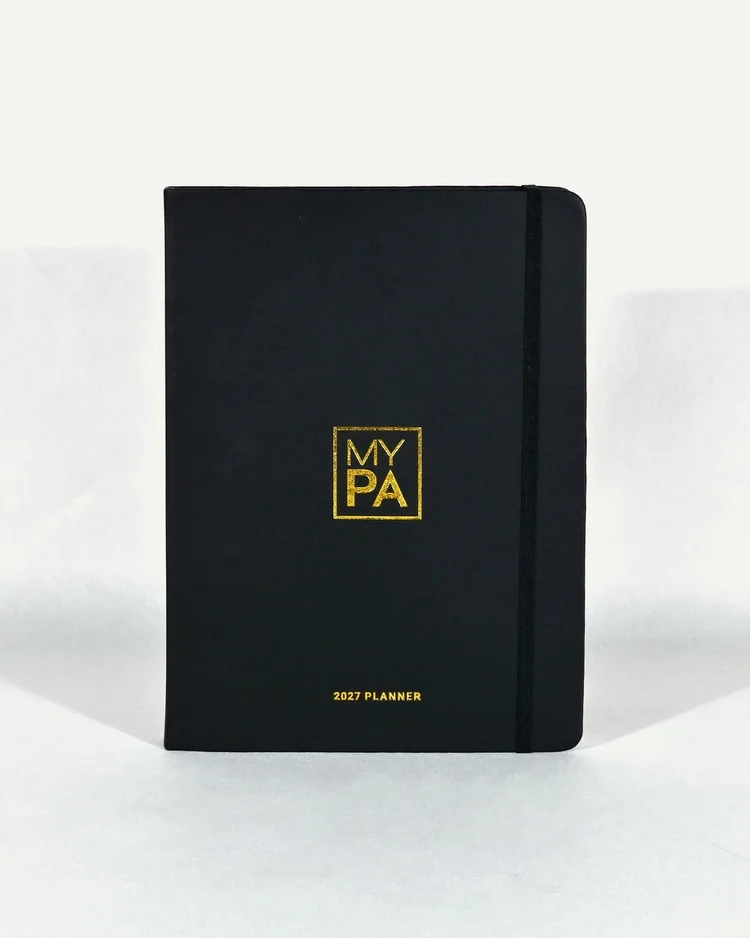
Here’s what I had in mind when I created MY PA:
Not perfection. Not pressure.
But something to lean on when life (and business) gets overwhelming.
Because let’s be honest — you’re juggling a lot:
💼 The business you’re building
🧠 The ideas you’re trying to organise
⏳ The time you never seem to have enough of
😴 The sleep you’re trying to protect
🌀 The stress that creeps in when you’re doing everything… but nothing feels done
So how do you make your planner feel less like pressure — and more like a partner?
🌤 Morning:
Start with intention — not Instagram.
Open your planner before you open your inbox.
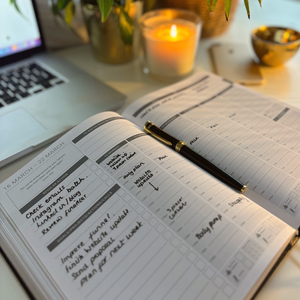
Set your Top 3 priorities for the day.
Time-block what matters.
Leave space for real life (spoiler: it never goes to plan — and that’s okay).
You’re not aiming for perfection — you’re setting your anchor.
🔁 During the day:
Use it to pivot, not panic.
Things will shift. Plans will break. That’s life.
But with a planner, you’re not reacting — you’re adjusting with intention.
You know what matters. You can come back to it.
🌙 Evening:
Quick check-in, no judgment.
What worked? What didn’t?
Where did your energy actually go?
Carry things over, rewrite your priorities — breathe.
You’re not behind. You’re learning how you work best.
💬 Over time…
You’ll feel the difference. Not in a big bang.
But in the little things:
✅ You stop feeling like you’re constantly behind
✅ You start noticing what’s actually moving the needle
✅ You sleep better (because your brain isn’t holding it all)
✅ You make space for the life you’re actually trying to build
💡 Final Thought:
Your planner isn’t here to run your life. It’s here to support it.
So treat it like a best friend:
Confide in it. Lean on it. Let it remind you what matters.
And most importantly — use it.
Because the version of you who writes things down, reflects, and follows through?
That version isn’t a dream.
That version is a habit.
And the shift doesn’t come from doing more —
It comes from doing the right things, with intention.