Quitting your job to start a business sounds bold. It also sounds like one of the fastest ways to put yourself under financial pressure and make terrible decisions.
The smarter move? Keep your job. Build alongside it. Let your salary fund your business while you figure out what works, what doesn’t, and whether this thing has legs.
Millions of successful businesses were started exactly this way , evenings, weekends, lunch breaks. You don’t need eight hours a day. You need one or two focused hours, used consistently.
This guide shows you how to build a real business around a full-time job without burning out or staying stuck. If you’re starting from zero, read the full guide first: How to Start a Business with No Money.
Why You Shouldn’t Quit Your Job (Yet)
Most advice about starting a business glorifies the leap. “Just go for it.” “Burn the boats.” It makes for a great story, but it’s terrible advice for most people.
When you quit your job before your business makes money, you’re not being brave. You’re putting a countdown timer on yourself. You need to earn fast, which means you’ll take on the wrong clients, undercharge, skip the foundation work, and make short-term decisions that hurt you long-term.
Your 9 to 5 gives you something invaluable while you build: breathing room. It covers your rent, your food, your bills. That safety net lets you be strategic instead of desperate.
The goal isn’t to stay in your job forever. The goal is to transition on your terms, when the business is ready — not when your savings run out.
How to Find the Time
The most common objection: “I don’t have time.”
You probably do. You just don’t have unstructured free time — and there’s a difference. Building a business alongside a job isn’t about finding spare hours. It’s about creating them.
The 1–2 Hour Rule
You don’t need a full day. You need 60–120 minutes of focused, intentional work on your business. Every day, or at least five days a week.
That might look like:
6–7am before work: build your offer, create content, reach out to prospects
Lunch break: respond to enquiries, research, plan
8–10pm after work: deliver client work, improve systems, follow up
The key word is focused. Not scrolling Instagram. Not reorganising your Notion. Not “researching.” Actual work that moves the business forward.
If you’re not sure how to structure those hours, time blocking is one of the most effective ways to protect your business time from being swallowed by everything else.
Redesign Your Day
This is where discipline matters more than motivation.
Going to bed earlier means waking up earlier. Waking up earlier means having time before the world needs your attention. That quiet hour before work can be the most productive hour of your day.
You don’t need to overhaul your entire life. Small shifts compound:
Bed by 10pm instead of 11:30pm
Phone on airplane mode during your business hour
One clear task per session, decided the night before
These aren’t dramatic changes. But over weeks and months, they create real momentum.
What to Work On (And What to Ignore)
When your time is limited, you can’t afford to waste it on things that feel productive but don’t generate results.
In your first few months, the only things that matter are:
Defining your offer clearly
Talking to potential customers
Making sales
Delivering good work
Everything else — logos, websites, social media templates, colour palettes, business cards — is a distraction. It feels like progress, but it’s not. Those things matter later. Right now, revenue matters.
If you’re not sure what to focus on first, the 5-step framework from idea to execution gives you a clear sequence to follow.
How to Stay Consistent Without Burning Out
The biggest risk isn’t that your idea won’t work. It’s that you’ll run out of energy before it has time to work.
Building a business alongside a job is a marathon, not a sprint. If you push too hard for too long, you’ll burn out and quit — not because the business failed, but because you did.
Some practical rules to protect yourself:
Take at least one full day off per week — no business work at all
Don’t sacrifice sleep consistently — tired decisions are bad decisions
Celebrate small wins — your first enquiry, your first sale, your first repeat customer
Review your progress weekly so you can see how far you’ve come
A simple weekly planning ritual can help you stay on track without overthinking. And if consistency is something you struggle with more broadly, we’ve written a full guide on how to stay consistent when starting a business.
When to Consider Leaving Your Job
There’s no magic number, but here are some signals that you might be ready:
Your business income consistently covers your essential living costs for 3+ months
You have a pipeline of work or customers, not just one-off sales
You have enough savings to cover 3–6 months of expenses as a buffer
You’re turning down work because you don’t have time — not because nobody’s asking
If none of those are true yet, keep building. There’s no shame in taking your time. The businesses that survive are the ones that were built on solid ground, not on hope.
When the time does come, having a clear plan makes the transition smoother. Our business launch checklist covers the practical steps to have in place before you go full-time.
Check Your Employment Contract
One practical thing people forget: check whether your employment contract has any restrictions on running a side business. Some contracts include non-compete clauses, moonlighting policies, or intellectual property agreements.
In most cases, starting a side business is perfectly fine — especially if it’s in a different industry to your employer. But it’s worth checking so you’re not caught off guard.
Your Job Isn’t Holding You Back — It’s Funding Your Future
The narrative that you need to “take the leap” is designed for social media, not real life. The reality is that most successful entrepreneurs built their business on the side before they ever went full-time.
Use your job as a launchpad, not a cage. Build with intention. Stay patient. Transition when the numbers tell you it’s time.
For the full roadmap on building a business from nothing, read: How to Start a Business with No Money (Step-by-Step Guide).
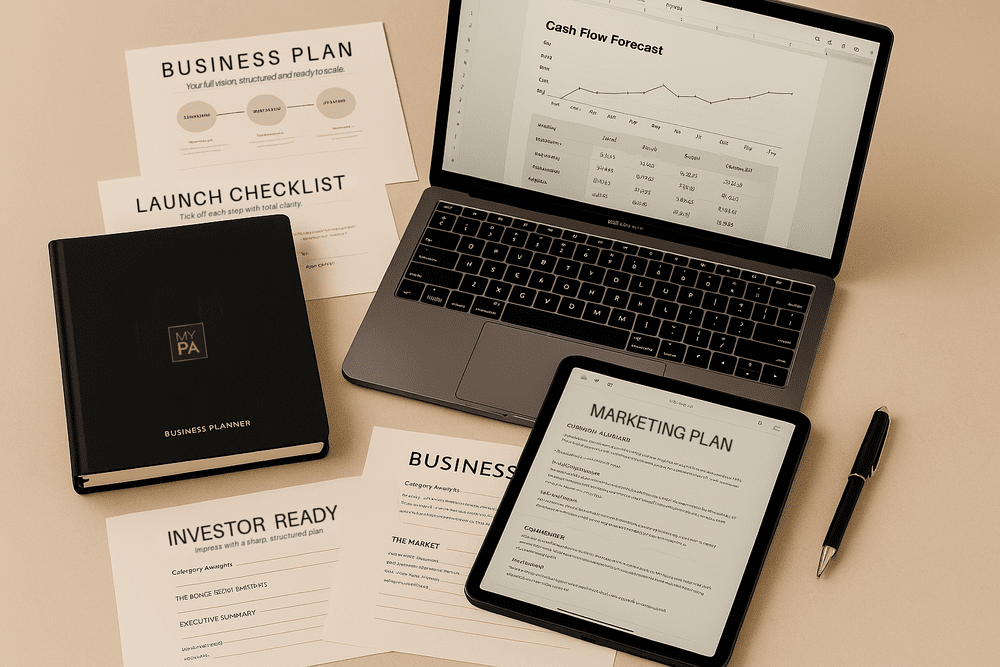
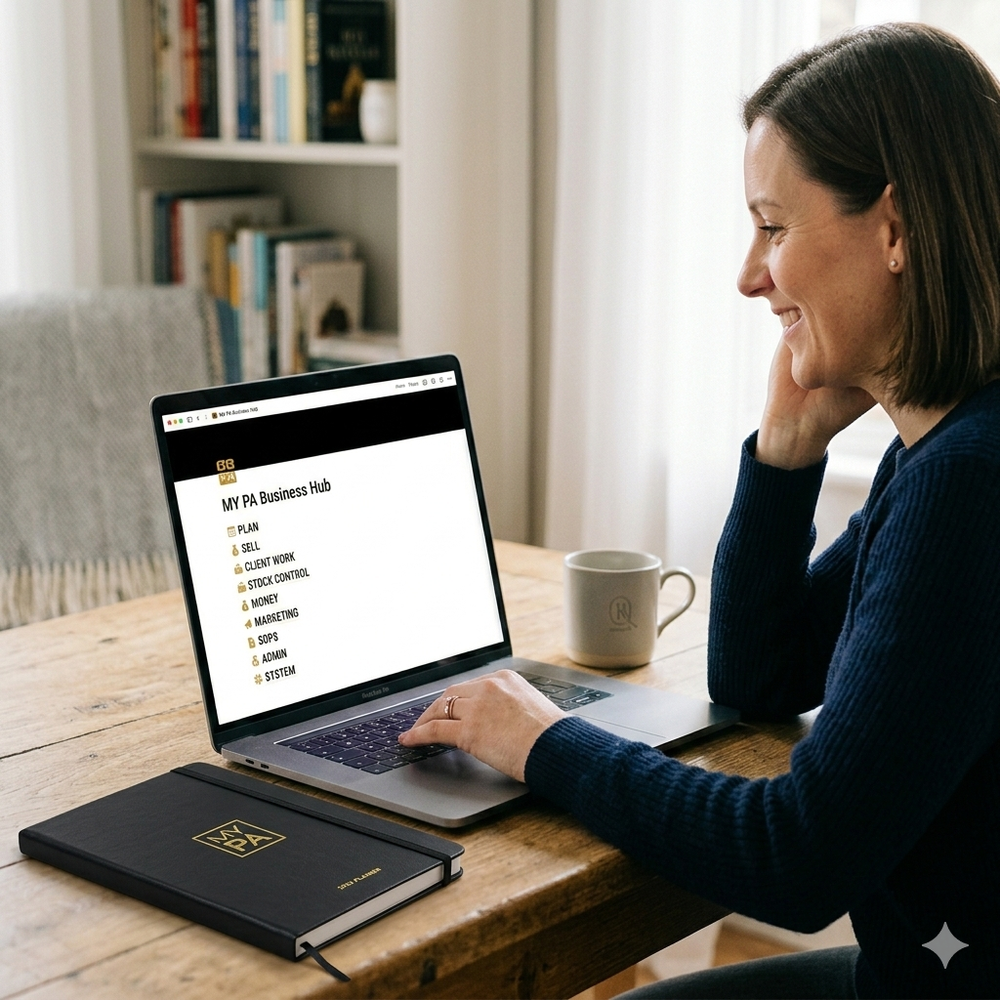
And if you want a structured way to plan your business time each week, the MY PA Business Planner is designed to help entrepreneurs manage their goals, priorities, and daily actions — even when time is tight.
Start your business without guessing
The Business Starter Kit gives you the plan, the pricing, and one place to run it, so you always know what to do next.
- Clear plan, step by step from idea to launch.
- Price for profit, know what to charge and what you will make.
- One Business HQ, run your entire business from one place from day one.
Start free, then choose the next step when you are ready.